A large SUV, sometimes called ‘full-size’, is broadly defined as measuring more than 5.0m in length, but the rest of the definition is less clear. Some large SUVs are available with only four or five seats while others can have seven-seat or even eight-seat layouts. Another major difference is the underpinnings, with some built the same way as a passenger car while others use more rugged, ute-based platforms for improved off-road and towing capability.
Motoring
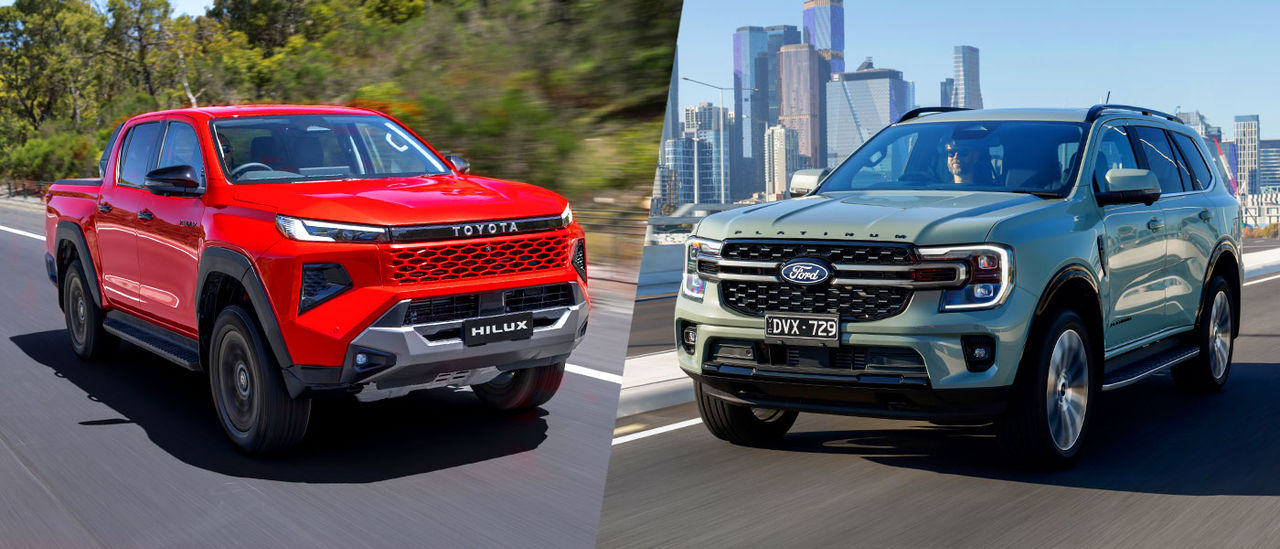
Large SUV vs dual-cab ute: which is best for families in Australia?
For many Australians, the modern dual-cab ute has become the family car of choice, but is it really a better option than a large SUV? This guide will help you decide – and to find the best utes and SUVs on sale now.
It’s impossible to ignore the rise and rise of the dual-cab ute in Australia over the past decade. No longer are these workhorses confined to the job site – they’re now the choice for millions of Australian families regardless of where people work.
Which means if you’re looking for a new family vehicle, a dual-cab ute is often on the shortlist next to a more conventional choice – the large SUV.
“There’s no doubt dual-cab utes have come a long way in terms of refinement and suitability for family duties, which is part of the reason they’re now consistently some of the best-selling vehicles in Australia,” says RACV Motoring Editor, Terry Martin. “But equally not all families are suited to a ute for their lifestyle, so a large SUV may well be a better choice.”
Let’s guide you through the pros and cons of both the dual-cab ute and large SUV to help determine which is best for your family’s needs.
More: Research and compare new cars, SUVs and utes on sale today in Australia
In this article
- Should I buy a large SUV over a dual-cab ute?
- • Large SUV pros and cons
- • Top 10 Best Large SUVs to consider
- Should I buy a dual-cab ute over a large SUV?
- • Dual-cab ute pros and cons
- • Top 10 Best Dual-Cab Utes to consider
- Large SUV vs dual-cab ute – Buyer’s checklist
- Large SUV vs dual-cab ute – FAQs
Should I buy a large SUV over a dual-cab ute?
Do you have a growing family? Or enjoy off-road trips? Perhaps tow a boat or caravan? If any of these – or all of them – sound like you, then a large SUV may be the best choice for you.
Large SUVs like the Ford Everest and Toyota Prado are amongst the most popular SUVs in Australia these days, thanks to the combination of space and capability they offer. Both are capable of fitting a family of five, or seven, have plenty of off-road capability and can tow up to 3500kg.
Not that all large SUVs are designed for getting off-road or towing heavy loads. There are several more urban-focused and quite refined mainstream large SUVs to choose from these days. This list includes the likes of the Hyundai Palisade, Mazda CX-80 and Volkswagen Tayron.
While diesel engines are on the decline, there are still several notable turbo-diesel large SUVs as the extra pulling power is ideal for these types of bigger vehicles. But at the same time, there are plenty of newer powertrain options, including all-electric.
If you aren't planning on towing or heading off-road, a hybrid or fully electric SUV could help save on your running costs. So, depending on your needs there will be a large SUV to suit, if that’s what you feel is best for your lifestyle.
Large SUV pros:
- Improved visibility: One major selling point for large SUVs is the excellent visibility they offer, thanks to a higher seating position.
- Space for seven occupants: Many large SUVs offer a third row of seating that is helpful for larger families, something dual-cab utes simply cannot match.
- Extra cabin room: Even if it only has five seats, a large SUV typically offers plenty of space for its occupants compared to a dual-cab ute. The cabin cargo area can also be more practical than a separate load bay found in a ute.
- Ready for off-road adventures: Several popular large SUVs are very capable off-road vehicles, perfect for camping trips and other adventures.
- Stronger engine performance: Bigger engines, especially turbo-diesels, allow for greater towing capacity than most medium SUVs.
- Comfortable driving experience: While there are many large SUVs built on the same underpinnings as utes, many are more car-like which makes for a more comfortable, urban-friendly driving experience.
Research and compare family SUVs on sale: prices, specs, features, running costs and safety
Large SUV cons:
- Typically higher purchase price: Depending on which model you look at, a large SUV will generally cost more than an equivalent or similarly specified ute.
- Potentially higher fuel consumption: A bigger vehicle typically leads to more fuel consumption, so you must choose carefully. If you don’t plan on going off-road or towing, a more urban-focused hybrid or EV might make more sense.
- Expect higher servicing costs: Another obvious issue is a bigger SUV with a larger engine typically brings higher servicing and maintenance costs.
- Some are less off-road capable: The more car-like examples are not designed for rugged off-road use.
- More difficult to manoeuvre: Bigger isn’t always better; the extra size can make for a more challenging driving experience, especially when it comes to parking in the city and suburbs.
Top 10 Best Large SUVs to consider:
- Ford Everest – The Blue Oval’s large SUV is at home in both the city and the bush.
- Toyota LandCruiser 300 Series – A long-running favourite for families who love adventure.
- Isuzu MU-X – Based on the Isuzu D-Max ute, the MU-X has excellent off-road and towing capability.
- Hyundai Santa Fe – More urban friendly and available with seven seats and hybrid power.
- Chery Tiggo 8 – A good-value option with both petrol and plug-in hybrid (PHEV) powertrains.
- BYD Sealion 8 – The Chinese brand’s seven-seat plug-in hybrid combines space and efficiency.
- Kia EV9 – The South Korean brand has the seven-seat Kia Sorento with petrol, diesel, hybrid and plug-in hybrid power, but the EV9 is the large family SUV for those looking for an EV.
- Subaru Outback – Blurs the line between a wagon and SUV, albeit less so with the latest generation, but it has been a popular choice for decades because of its practicality.
- BMW X5 – A popular choice for those looking for a large SUV with a luxury twist.
- Land Rover Defender – As it does, Land Rover combines luxury with off-road capability for those who want the best of both worlds.
Research and compare hybrid SUVs on sale: prices, specs, features, running costs and safety
Should I buy a dual-cab ute over a large SUV?
This may sound a bit repetitive, but if you have a growing family, enjoy off-road trips and perhaps tow a boat or caravan, then a dual-cab ute may be the best choice for you…
That’s because a modern dual-cab ute and a large SUV can do most of the same things, which is why this comparison is so relevant for anyone looking to make a decision between the two types of vehicles.
In the not-too-distant past, dual-cab utes were strictly work vehicles. They were basic in construction, built for durability rather than comfort, and were primarily limited to worksites and hardcore off-road use.
But around 2010, things started to change. The arrival of the Volkswagen Amarok and the Australian-designed ‘T6’ Ford Ranger ushered in a new era of dual-cab utes that were more polished, making them nicer to drive on-road and away from worksites.
Since that time, the dual-cab ute has continued to evolve and become increasingly premium, family-friendly and cost-effective to run with hybrid and even fully electric powertrains.
Dual-cab ute pros:
- Dual work and family: If you need family transport but also work in an industry that requires a ute, the modern dual-cab should be capable of handling both.
- Highly off-road capable: While they may have family-friendly cabins, most 4x4 utes are built on a strong chassis and suspension designed for heavy work use and off-roading.
- Something for everyone: As mentioned earlier, there are now dozens of high-end ute options, as well as sporty ones (think Ford Ranger Raptor) or off-road-focused models and even hybrid and electric utes.
- Big load area: One obvious benefit of a ute is the large tray which means you can carry a lot of extra cargo if needed.
- Tax breaks available: Depending on how you purchase and use your ute, you may be eligible for a fringe benefit tax exemption, which could save you thousands of dollars compared to a large SUV.
Research and compare dual-cab utes on sale: prices, specs, features, running costs and safety
Dual-cab ute cons:
- Smaller than they look: While the cabins have become more refined over time, the popular ‘medium-sized’ dual-cab utes such as Ranger, HiLux et. al. will typically have smaller back seat space compared to a large SUV. This compromise on rear passenger comfort may also be compounded by a more restricted range of seat adjustment.
- Less usable storage: Sure, they have a big tray out the back, but a lot of the time it’s not very practical. Items will shift and move in the tray, so it’s not necessarily the ideal place to put your shopping or other items you normally stow in a boot. Plus, if it doesn’t have a hard tonneau cover, items are susceptible to theft, and if there’s no cover at all your cargo will be left exposed to the elements.
- Tax breaks don’t apply to all: While a lot is made of the fringe benefit tax exemption for utes, that only applies if the ute is used for work with only “incidental” private trips. Be sure to read the fine print so you avoid any problems with the tax inspector.
- Work first, family second: While modern utes have improved, the reality is they are still designed primarily for heavy-duty work use, which can mean a firmer ride and heavier steering, which won’t appeal to all family buyers.
Top 10 Best Dual-Cab Utes to consider:
- Ford Ranger – A popular choice for its blend of ute practicality and SUV-like driving experience.
- Toyota HiLux – The long-time Australian favourite remains hard-working but is also more family-friendly than ever before.
- Isuzu D-Max – Less family-orientated but more rugged and capable off-road.
- BYD Shark 6 – The combination of ute size and space with a fuel-efficient plug-in hybrid powertrain has proven to be a sales hit.
- Mazda BT-50 – Based on the Isuzu D-Max but with a unique Mazda design, the BT-50 is an under-rated ute option.
- Kia Tasman – If you can look past the polarising exterior styling, the Tasman has a class-leading cabin and good ute credentials.
- Volkswagen Amarok – The German brand’s ute is now based on the Ranger but retains its more European focus on comfort and refinement.
- Mitsubishi Triton – A bit smaller than some of its rivals, the Triton is easier to live with around the urban environment.
- GWM Cannon Alpha – One of the growing number of Chinese utes that are a half-size bigger than the likes of the Ford Ranger. The Cannon Alpha is available with a plug-in hybrid option.
- Ram 1500 – One of several US super-sized utes that have entered the local market, offering a lot of interior space, payload and towing, but at a higher price.
Research and compare hybrid utes on sale: prices, specs, features, running costs and safety
Large SUV vs dual-cab ute – Buyer’s checklist
To help you make the right choice, consider the following questions. The answers should point you in the right direction.
How big is your family?
While both a large SUV and dual-cab ute may seem like good family choices, the reality is most SUVs will offer better cabin space. That means if you’ve got children, especially older kids, or regularly carry extended family and friends, then a large SUV is probably better suited to your lifestyle.
But if you have smaller kids, who are out of car seats, a ute might be big enough. You just need to ask yourself who will be riding in the car on a regular basis and assess your options.
Do you plan to tackle serious off-road trails?
While dual-cab utes and large SUVs offer adventurous models with off-road capability, if you’re not planning on going for long trips off the beaten path, then factor that into your decision.
If most of your driving is around the city and suburbs, one of the more urban-focused large SUVs is probably a better option. But if you like a weekend off-road trip, a camping adventure or plan on towing, a more rugged large SUV or ute could be for you.
What are your typical running costs?
Both large SUVs and dual-cab utes are now available with a wide variety of powertrain choices, not just diesel engines. So, depending on your requirements, a hybrid, plug-in hybrid or even an electric option could help you realise savings with vehicle running costs.
To help understand that difference, compare running cost data across both dual-cab utes and large SUVs with RACV Car Match. You can also check out real-world fuel economy results under the Australian Automobile Association’s Real-World Testing Program (RWTP), which includes electric vehicles.
How safe is this car?
All modern large SUVs and dual-cab utes should be fitted with a high level of safety equipment, including advanced driver assistance systems (ADAS). These can vary between brands and models in how they react to Australian driving conditions, so test them out before you buy.
Always look for a five-star ANCAP safety rating based on the latest testing protocols where possible, while for older cars you can check out Australia’s Used Car Safety Ratings. Automatic collision notification systems with emergency call (eCall) are also becoming increasingly common.
How does it feel to drive both types of vehicle?
Before you make a definitive decision on size, get out and drive both a large SUV and a dual-cab ute to work out which one you’re most comfortable with during your regular driving routine.
If you’re looking to move into a ute for the first time, it’s particularly important to really understand whether you can live with it and the compromises that it brings.
As mentioned above, the large SUV market is quite diverse but can be split into two primary segments – urban and off-road. An urban SUV is typically built on what’s called a ‘monocoque’ chassis, which is how most passenger cars are built. These are SUVs like the Hyundai Santa Fe and Toyota Kluger.
An off-road SUV, sometimes referred to as a 4x4, is based on a ‘body-on-frame’ chassis, a stronger but simpler platform that allows for better off-road and towing capability. They often share the chassis with a ute. Examples include the Ford Everest and Isuzu MU-X.
Utes come in a variety of sizes and styles but the most popular is the dual-cab, which means it features four doors and two rows of seating. It can come as either a ‘pick-up’ or ‘cab-chassis’ – the former has a built-in ‘bed’ while the latter has a bolted-on, customisable ‘tray
There are both single-cab and extended-cab ute options available, but due to having either a single row of seats or very cramped rear seats, are not popular among family buyers.
A hybrid car (HEV) uses a petrol engine with a small battery that can’t be externally charged, while a plug-in hybrid (PHEV) adds a larger battery that you can plug in for limited electric-only driving. A BEV is fully electric and runs solely on battery power.
You can compare loan repayments, fuel costs, servicing, insurance and other expenses involved in car ownership by visiting the RACV Car Match website. It allows you to compare thousands of cars to get a clearer picture of what you’ll be paying.
The information provided is general advice only. Before making any decisions please consider your own circumstances and the Product Disclosure Statement and Target Market Determinations. For copies, visit racv.com.au. As distributor, RACV Insurance Services Pty Ltd AFS Licence No. 230039 receives commission for each policy sold or renewed. Product(s) issued by Insurance Manufacturers of Australia Pty Ltd ABN 93 004 208 084 AFS Licence No. 227678.


