We've recently reviewed and updated our Privacy Charter, which describes how we use cookies and other technologies to understand and improve your browsing experience. By using our site, you agree to us collecting this information and to our Privacy Charter.
You’ll be sent the latest news, exclusive offers and competitions to your inbox.
Electric
2026 Mazda CX-6e: price, specs and release date in Australia
Terry Martin
April 10, 2026
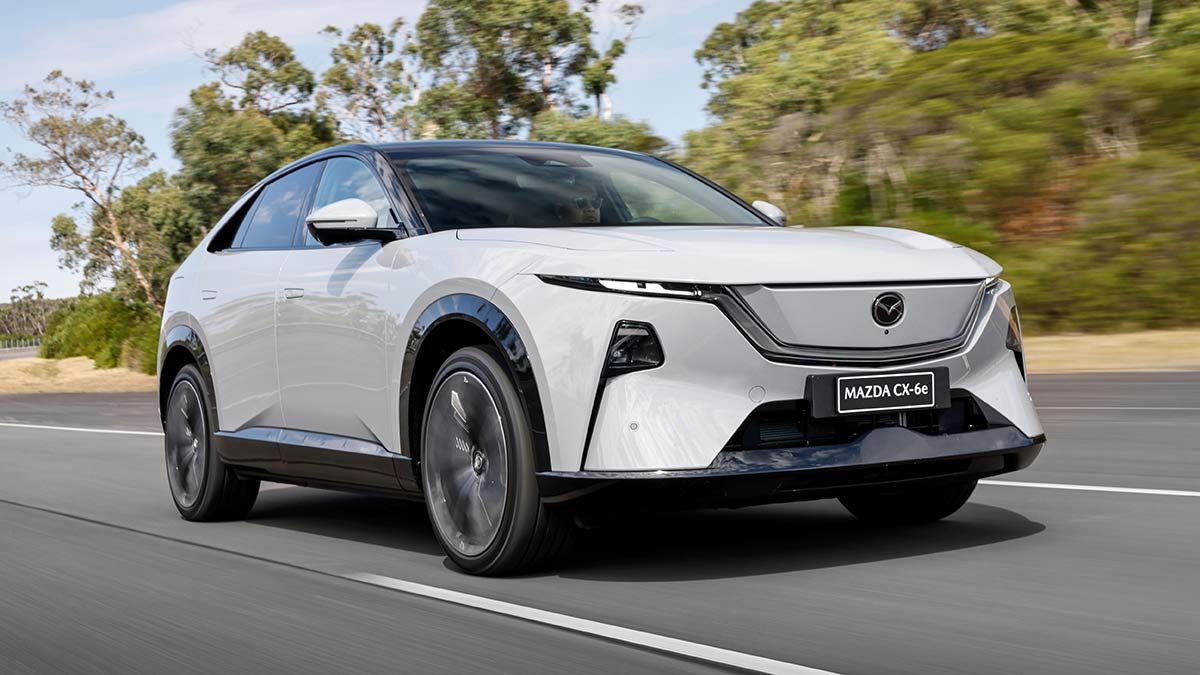
The new Mazda CX-6e EV is targeting the Tesla Model Y and BYD Sealion 7 medium electric family SUVs with a high-tech, value-laden package starting below $54,000. Here’s everything you need to know.
Mazda is preparing to add another new model into Australia’s top-selling medium SUV segment – the 2026 Mazda CX-6e – which is a battery-electric vehicle aimed squarely at the Tesla Model Y and BYD Sealion 7 EVs.
Priced from $53,990 before on-road costs, the high-tech new Mazda CX-6e – featuring a giant 26-inch touchscreen and offering a claimed 450km-plus driving range – will sit alongside the new petrol-engined Mazda CX-5 and the higher-tier petrol, diesel and plug-in hybrid Mazda CX-60.
The CX-6e is closely related to the Mazda 6e sedan that’s now on sale and similarly hails from the Japanese brand’s joint venture with Changan Automobile, which supplies the dedicated EV platform and builds the Mazda EVs in China.
Nonetheless, Mazda Australia managing director Vinesh Bhindi is pitching its new EVs as cars “that don’t feel foreign to drive” and which appeal to “everyday Australians by offering a Mazda-specific experience, encompassing the benefits of a trusted and reputable brand represented for 68 years with the support of almost 150 dealers across the country”.
Are you ready to place your trust in Mazda with the radical new CX-6e? Here’s a full guide to the new SUV, from pricing, power and driving range to roominess, tech and safety, plus answers to key questions on Chinese car quality, future models and Mazda’s position in Australia as BYD, Geely, Zeekr and other brands work on their overtaking moves.
When does the Mazda CX-6e go on sale in Australia?
Australian buyers can now place an order for the 2026 Mazda CX-6e, ahead of first customer deliveries due in September.
The CX-6e stands next to the closely related 2026 Mazda 6e EV sedan, which is priced from $49,990 plus on-road costs with first deliveries due mid-year. The electric SUV also serves as a battery-electric alternative to the new-generation Mazda CX-5, which is only available with a petrol engine, and the Mazda CX-60 that’s sold with diesel, petrol and plug-in hybrid (PHEV) options.
In an interview with RACV, Mazda Australia managing director Vinesh Bhindi said the carmaker would use the CX-6e to appeal to its heartland “Australian mum and dad buyer” and to offset penalties it is accruing under the federal government’s New Vehicle Efficiency Standard (NVES).
“From our viewpoint, it will attract individuals and families, it will give that opportunity for some of our loyal Mazda buyers to take their first step in the journey of fully electrified battery EV powertrains, but it’s available to all,” he said. “When you hear about the final value proposition, it will shock.”
The 2026 Mazda CX-6e is priced from $53,990 plus on-road costs for the highly specified CX-6e GT, while the range-topping CX-6e Azami starts from $56,990 plus ORCs. As a launch special, the first 1000 GT buyers will receive a free upgrade to the Azami, saving $3000.
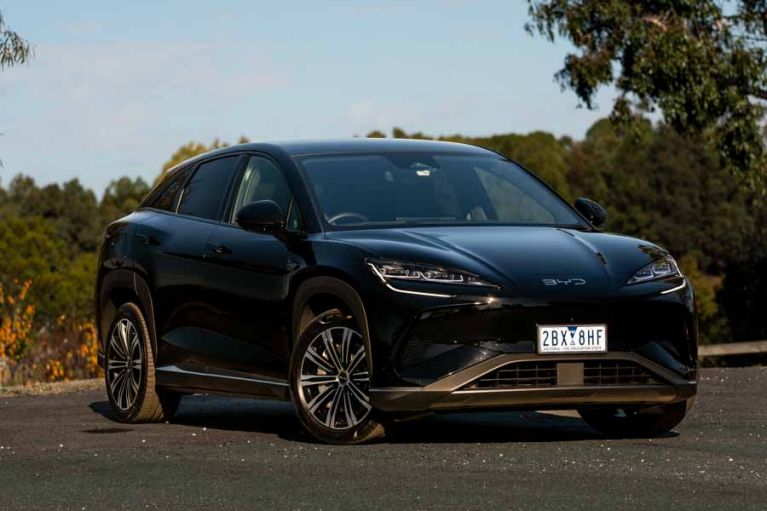
The entry price for the Mazda CX-6e undercuts the BYD Sealion 7 (from $54,990 plus ORCs) and is about $5000 more affordable than the top-selling Tesla Model Y (from $58,900 plus ORCs).
“If you look at the Mazda 6e value proposition – not just sticker price – it’s very sharp and we intend for the SUV to be the same,” said Mazda Australia chief Vinesh Bhindi, highlighting that sourcing EVs from China brought cost advantages.
The general manager of technical development at Changan Mazda Automobile in China, Hiroshi Ozawa, told RACV that the BYD Sealion 7 and Tesla Model Y were benchmarks for Mazda Motor Corporation when developing the CX-6e for global exports markets.
“The BYD Sealion 7 is the primary competitor and also the Tesla Model Y. Those are the major competitors for us, including in Australia,” Ozawa-san said (through an interpreter). “We looked at those competitors in developing our model.”
Many manufacturers now offer a battery-electric model in the best-selling medium SUV segment. Other key rivals for the CX-6e include EVs from compatriot Japanese brands – Toyota bZ4X, Subaru Solterra, Nissan Ariya – as well as popular South Korean EVs – Kia EV5, the new Hyundai Elexio – and contenders from a raft of new Chinese brands: GAC Aion V, Geely EX5, Leapmotor C10, Zeekr 7X and, not least of all, the Deepal S07, which is based on the same platform as the CX-6e.
The standard Mazda new vehicle warranty of five years/unlimited kilometres applies to the CX-6e, while the high-voltage battery warranty extends to eight years/160,000km. Service intervals (expected to be 12 months/20,000km) and capped-price servicing costs are still to be confirmed.
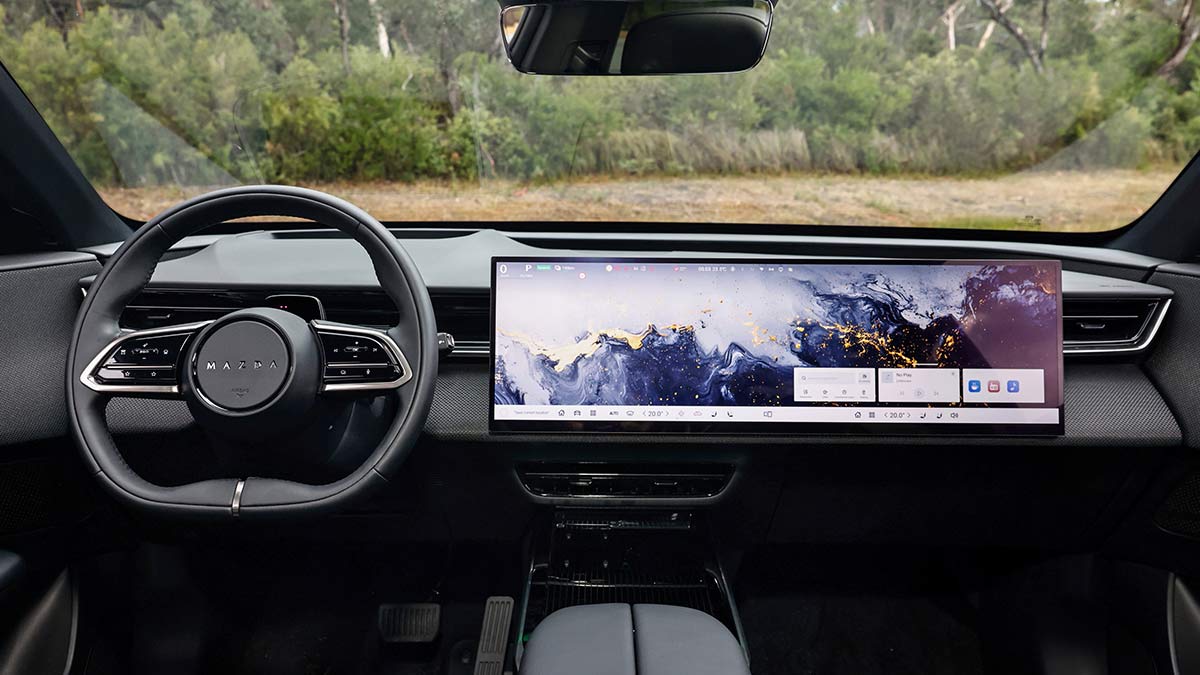
A gigantic 26.45-inch touchscreen dominates the dash of the 2026 Mazda CX-6e.
Mazda CX-6e standard equipment & features
The highly specified 2026 Mazda CX-6e GT and Azami use the same powertrain, leaving wheel size and exterior mirror tech as the key points of differentiation.
Mazda CX-6e GT features:
26.45-inch central touchscreen
50-inch head-up display
360-degree view monitor
Advanced keyless entry
Tri-zone climate control
Wireless Apple CarPlay and Android Auto
Wireless smartphone charger
Satellite navigation
23-speaker premium audio system
Heated and ventilated front seats
Heated steering wheel
Black synthetic leather trim (Maztex)
Powered remote tailgate with hands-free function
LED headlights, tail-lights and daytime running lights
Panoramic glass roof with electric sunshade
19-inch alloy wheels
Mazda CX-6e Azami adds:
Digital exterior mirrors
Digital interior mirror
21-inch alloy wheels
2026 Mazda 6e review | 🔎 RACV car reviews video
Mazda CX-6e exterior styling & dimensions
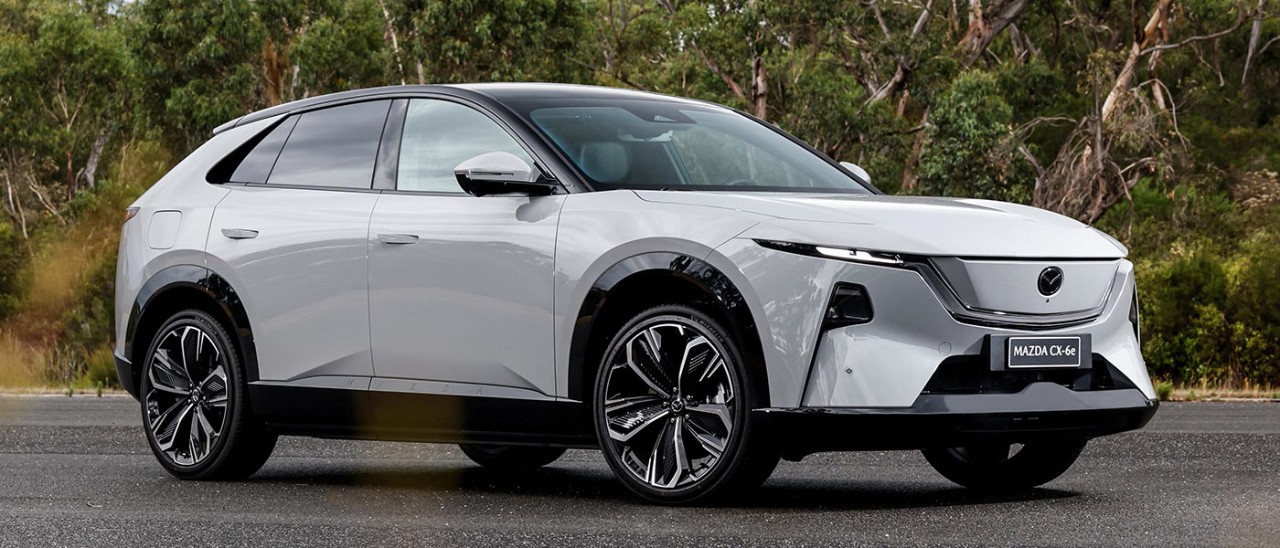
The 2026 Mazda CX-6e is based on Changan Automobile’s EPA electric vehicle platform that also underpins the Deepal S07 available in Australia, but Mazda’s design teams in Japan and Europe were responsible for the SUV’s styling.
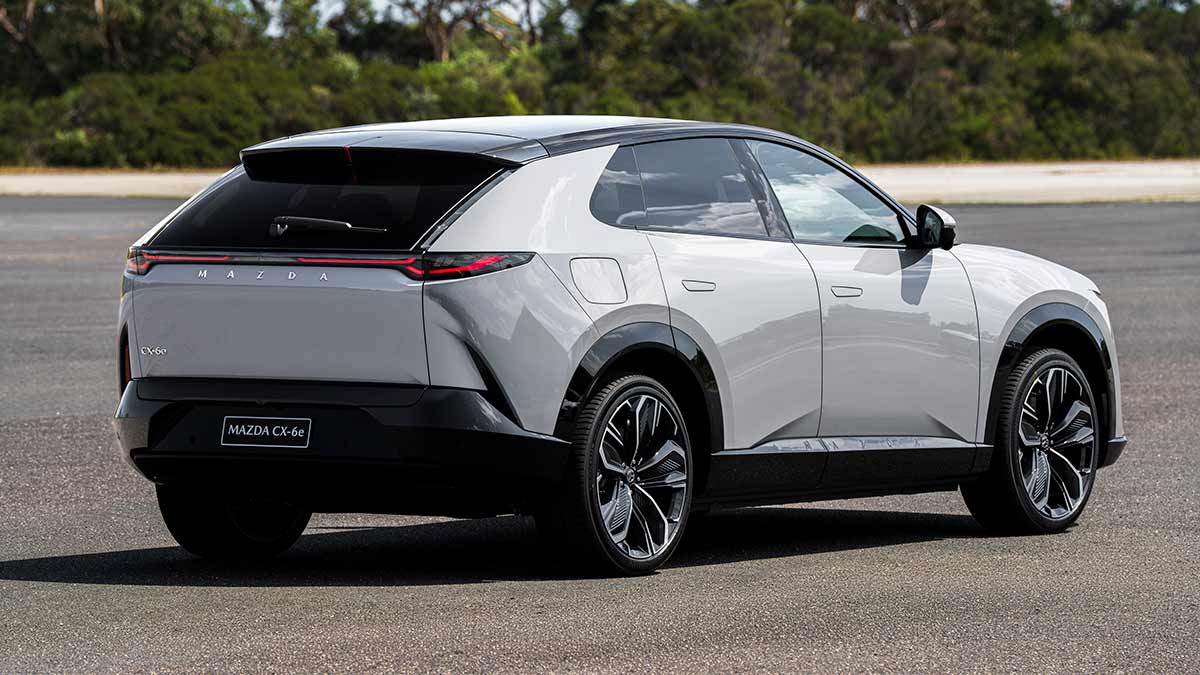
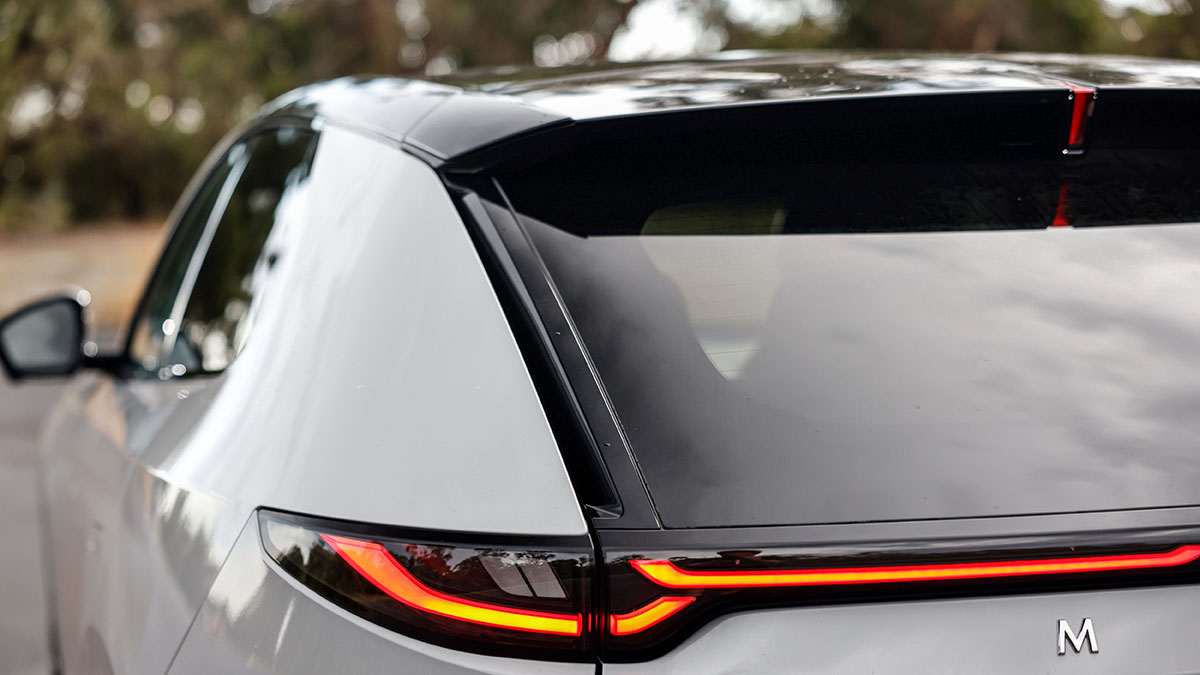
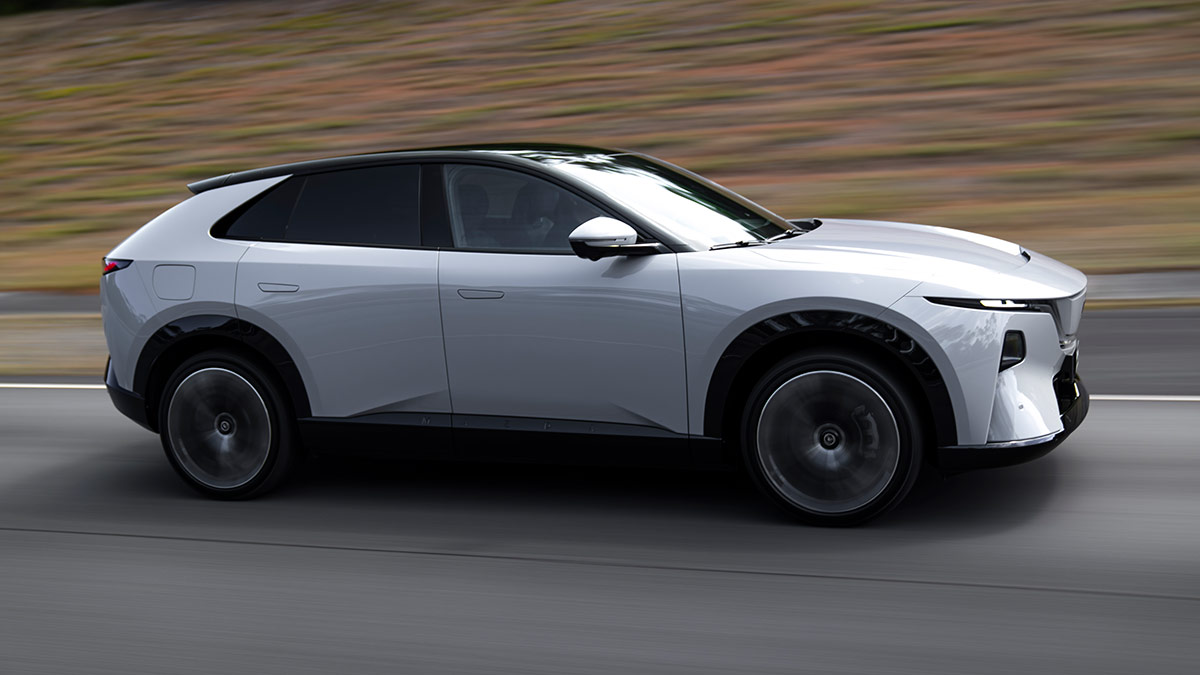
Chief designer Eiji Kimoto said Mazda created a long and sleek silhouette for the CX-6e, making “the car look as long and fast as possible, expressing a more futuristic, advanced and sporty appearance”. Sharp edges are used at the front and rear to convey this impression, while aero vents on the bonnet and at the rear pillars are designed to reduce air resistance and improve efficiency – and look cool, too.
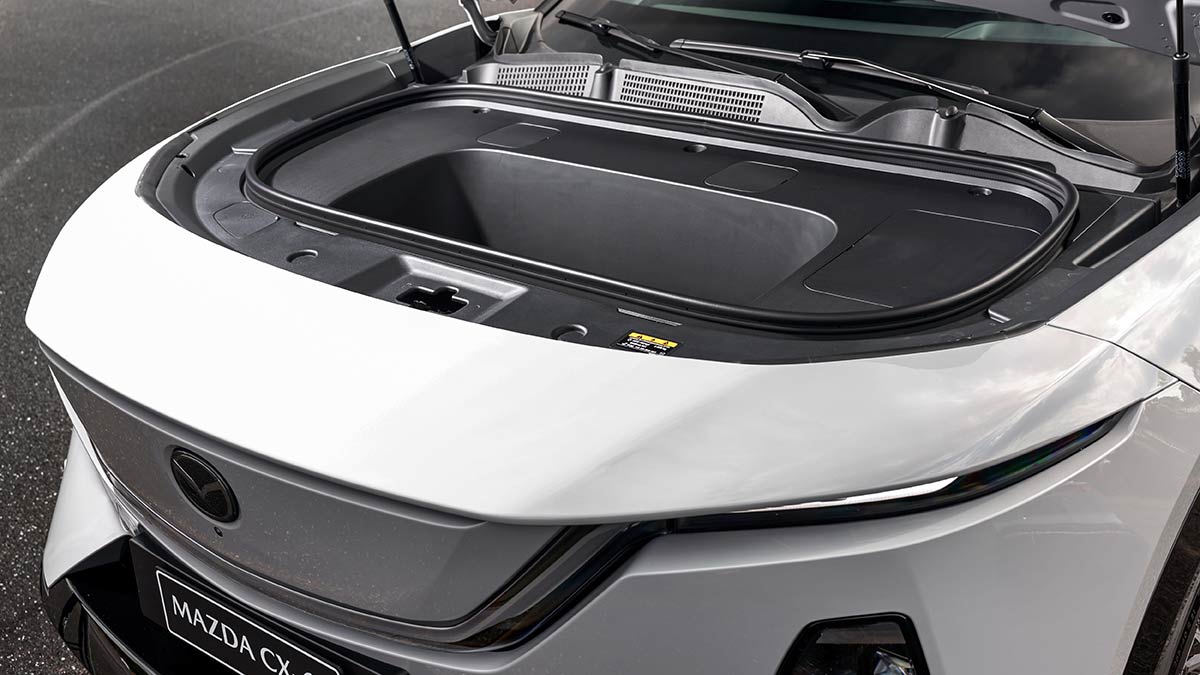
With no combustion engine and therefore no grille (there’s an 80-litre storage container under the bonnet), the designers had a blank canvas at the front end to create a fresh interpretation of the brand’s signature ‘wing’ graphic using LED lights.
A lot of sculpting and chiselling across the vehicle has generated a unique look, while high-tech slim side cameras (in lieu of exterior mirrors) are found on the flagship Azami. These feed live video to OLED screens on the door panels to show the rearward vision.
The Mazda CX-6e measures 4850mm long, 1935mm wide and 1620mm high. Ground clearance is 158mm. The SUV has a 2902mm wheelbase and a 970/978mm front/rear overhang respectively. The dimensions place Mazda’s electric family SUV as bigger overall than the five-seater Tesla Model Y and BYD Sealion 7. It also has a longer wheelbase than the standard five-seater Model Y (2890mm), but not the Sealion 7 (2930mm).
Seven exterior colours are available on the CX-6e – three mica: Crystal White Pearl, Nightfall Violet and Jet Black; and four metallic: Air Stream Blue, Aero Grey, Machine Grey and Soul Red Crystal.
Aerodynamic black diamond-cut five-spoke alloy wheels are offered with standard 19-inch (GT) and higher-grade 21-inch rims (Azami), the latter in a double-arm design.
The 2026 Mazda CX-6e is bigger than the Tesla Model Y.
An aero vent on the Mazda CX-6e bonnet helps smooth airflow across the car.
Rear pillars on the Mazda CX-6e also have air vents to aid aerodynamics.
Mazda claims the CX-6e has a driving range of more than 450km (WLTP).
A handy 80-litre frunk is found under the Mazda CX-6e bonnet.
1 of 5
Mazda CX-6e interior design, space & technology
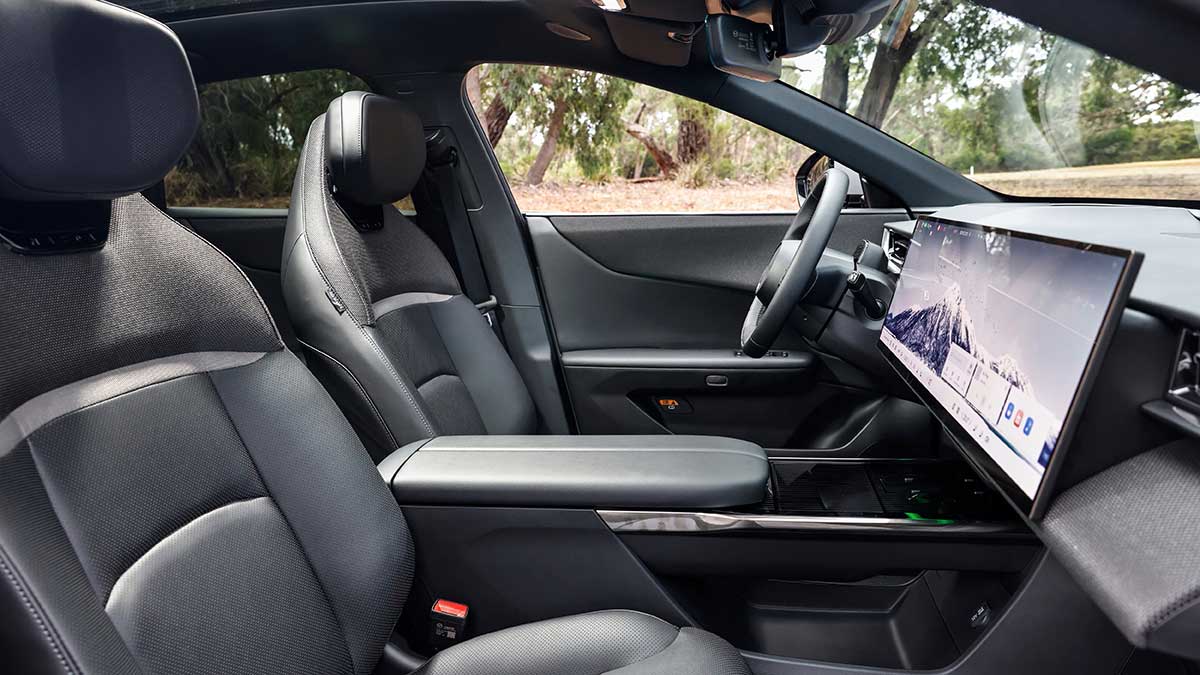
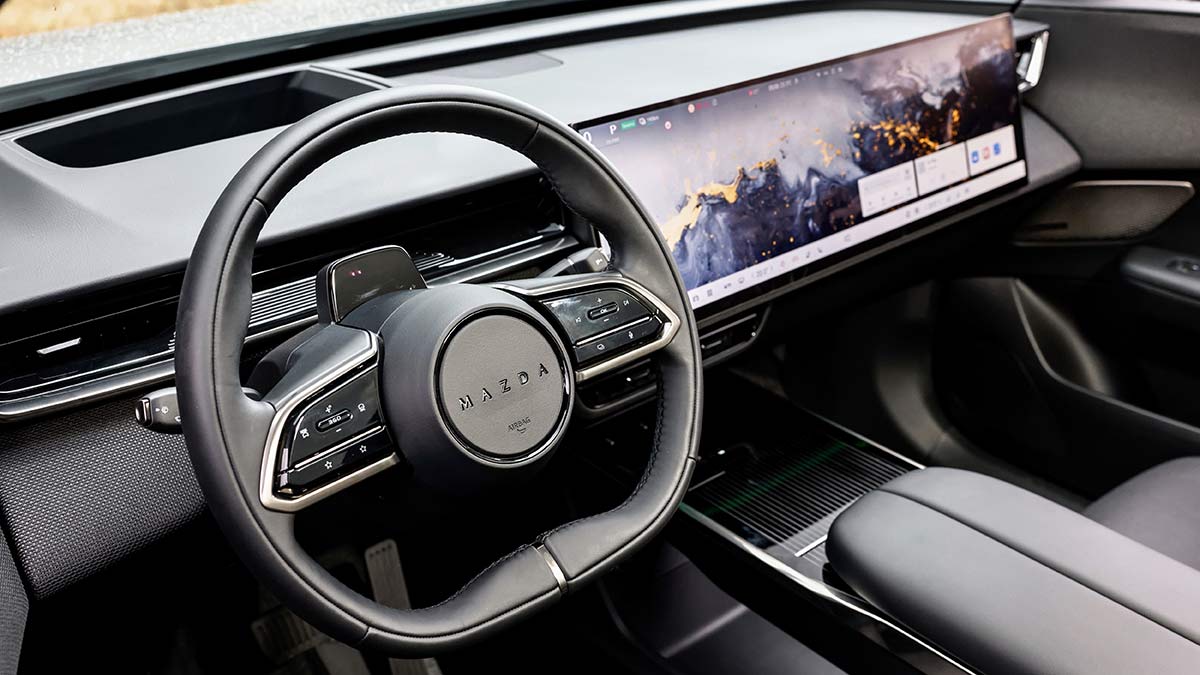
The biggest talking point of the 2026 Mazda CX-6e is the giant 26.45-inch touchscreen across the dashboard, offering a customisable dual-split layout that enables both the driver and front passenger to access personalised information – “with minimal distraction”, according to the carmaker.
Mazda Motor Corporation’s chief program manager for CX-6e, Hiroshi Ozawa, said the ultra-wide touchscreen brings a home cinema experience into the car.
“Inside the vehicle, it feels a bit like you’re in your living room. That’s the concept with this vehicle, like having a large flatscreen TV inside,” he said. “The large screen can be enjoyed by all the vehicle occupants … Our concept was to make sure that everyone in the car can enjoy the screen.”
Mazda says the screen has only 9.5mm of depth but offers a 32:9 aspect ratio with high pixel density (201 pixels per inch) that delivers “5K cinematic colour contrast and luminance for deep visual clarity and comfort in all lighting conditions”. It also insists the computing power behind it ensures quick response times, while the scratch-resistant aluminium-silicon screen coating minimises glare and reflections.
There’s no instrument panel in the CX-6e behind the steering wheel, but the driver is provided with a 50-inch head-up display that shows important details. Voice recognition and gesture control are designed to help with common commands, wireless Apple CarPlay and Android Auto is included, and sound is piped through a 23-speaker audio system with 1280W amp. The speakers in the front head restraints are also Bluetooth-enabled.
There will be an app that Australian owners can use for remote and connected services, including over-the-air (OTA) software updates. Vehicle to Load (V2L) functionality, where owners can power a laptop or run small electrical appliances, is also provided.
It’s all part of Mazda’s intent to provide a futuristic, but still comfortable, interior. A high level of creature comforts and amenities should be fitted standard across the range, from seat heating and ventilation to a 1.05-square-metre panoramic sunroof.
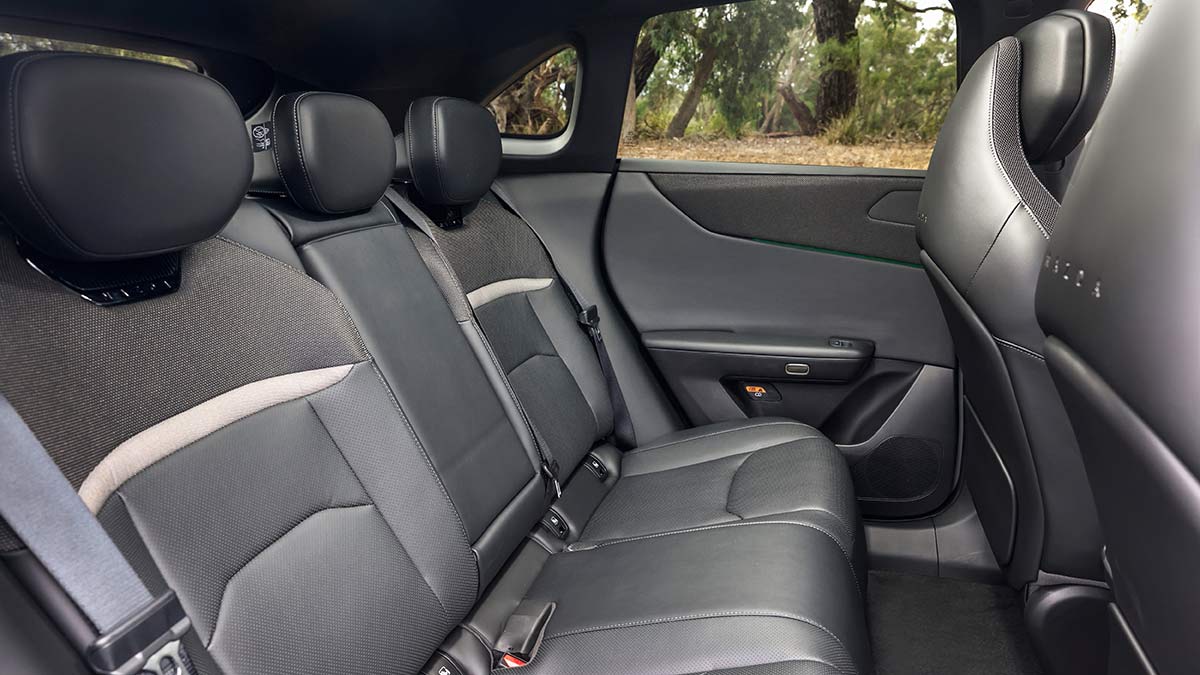
Scalloped front seatbacks maximise rear legroom, which extends to 990mm, according to Mazda. Rear knee clearance is 120mm, space beneath the front seats is a useful 150mm, while rear headroom and shoulder-room measure 994/1432mm respectively.
The standard interior trim is black Maztex (artificial leather) but beige can be ordered on both the GT and Azami grades for an extra $1000.
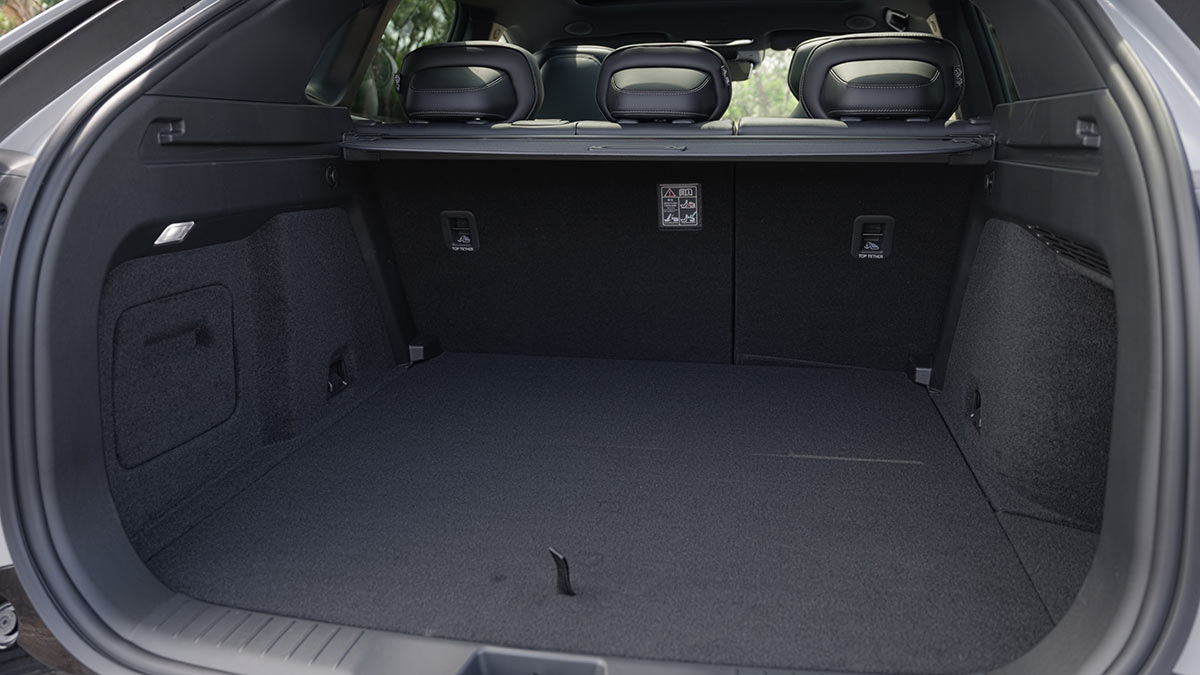
The boot area can hold 468 litres to the ceiling (363L to the tonneau cover) when the rear seats are upright, extending to 1434L (956L to tonneau cover/belt line) when they’re lowered using the 60/40 split-fold function. The load floor measures 967mm in depth to the upright rear seatbacks, and 971mm in width (between the wheelarches), while the height from load floor to ceiling is a maximum 700mm.
Mazda also points to the SUV’s low loading lip (700mm from floor to ground level) and conventionally shaped aperture at the tailgate (944mm wide x 674mm high) that help with loading large, bulky cargo. No spare wheel is provided.
The 2026 Mazda CX-6e has a high spec and minimalist, tech-laden layout.
The Mazda CX-6e uses a head-up display in lieu of a traditional instrument panel.
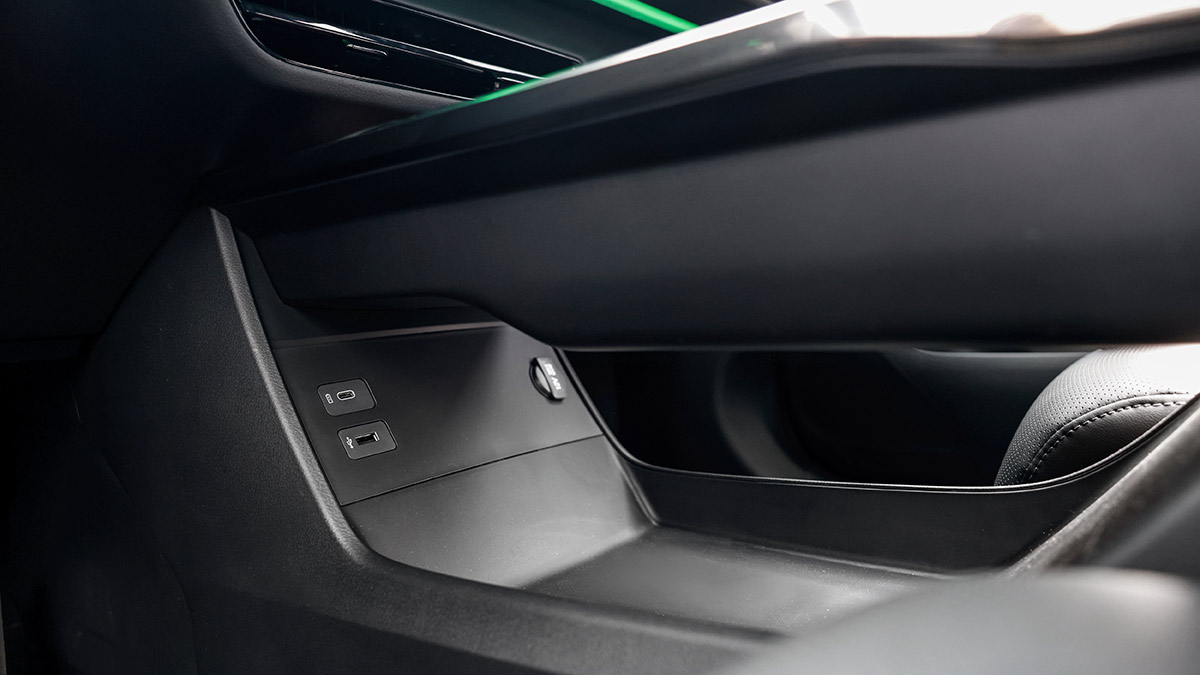
Lower front console on the Mazda CX-6e has a storage area and device charging points.
Sculpted front seatbacks help maximise rear seat legroom in the Mazda CX-6e.
The Mazda CX-6e has a wide aperture at the tailgate and a deep cargo area.
1 of 5
What is the power and EV range of the Mazda CX-6e?
The 2026 Mazda CX-6e is powered by a single electric motor that drives the rear wheels and draws energy from a 78kWh lithium iron phosphate (LFP) high-voltage battery. The e-motor produces 190kW of power and 290Nm of torque, enabling the SUV – which weighs 2130kg (kerb) – to accelerate from 0-100km/h in a claimed 7.9 seconds.
According to Mazda, the LFP battery provides a driving range of up to 484km on the WLTP combined cycle when 19-inch wheels are fitted. Electricity consumption is a claimed 18.9kWh/100km. Running on 21-inch wheels reduces the official range to 468km and increases consumption to 19.4kWh/100km.
The CX-6e can handle DC charging up to 195kW, at which point the battery can be charged from 10 to 80 per cent in a claimed 24 minutes. Replenishing the battery from 30-80% takes 15min. The SUV can also handle AC charging on both single- and three-phase power (up to 11kW), with a 0-100% charge using a dedicated EV home charger taking 8.5 hours.
Mazda executives say there are no plans at this stage to offer a longer-range battery or a dual-motor powertrain with higher performance and all-wheel drive. Mazda CX-6e chief program manager Hiroshi Ozawa told RACV that it would be easy to add more power with a second e-motor, delivering AWD traction, but said engineers did not want to compromise on the vehicle’s handling characteristics and the overall experience for the driver (which it calls ‘jinba ittai’).
“In China, all-wheel drive and a higher-power model has very fast straight-line driving,” Ozawa said (through an interpreter). “But for the cornering, when the speed is higher, for Mazda ‘jinba ittai’ we want all the occupants in the vehicle to have a confident feeling while the car is running, and we don’t feel that having excessively high power is appropriate.”
He added: “A two-wheel drive model with a single motor smooths the transition from gasoline models to battery EV. We thought about that from a customer’s perspective and we believe that this model will make our customers happy enough. Of course, in the future if customers come up with a need for such a model, we can consider having all-wheel drive.”
The CX-6e use a front MacPherson strut/rear multilink suspension with electric power-assisted rack and pinion steering and front 350mm ventilated/rear 346mm solid disc brakes. Australian models will use the suspension tune developed for Europe, rather than the one employed in China.
* Manufacturer’s recommended retail price. Does not include on-road costs.
The Mazda CX-6e has many driver assist safety features, but misses out on an emergency call system.
How safe is the Mazda CX-6e?
The 2026 Mazda CX-6e has not yet been tested by either ANCAP or European NCAP, however the related Mazda 6e sedan received a maximum five-star safety rating from Euro NCAP in 2025. This bodes well for comparable results under ANCAP assessment protocols.
The Deepal S07, which is based on the same platform as the CX-6e, has also received five stars from ANCAP, based on 2024 testing.
Despite offering remote and connected services, the Mazda CX-6e (and the 6e) does not include automatic collision notification and an emergency call (eCall) system, as found in other Mazda vehicles. Mazda Australia is hoping to add eCall, and other services, at a later point.
Who is Changan & what cars does it build for Mazda?
Changan Automobile is a Chinese state-owned carmaker that aims to be a top 10 global player by 2030. Based in Chongqing, Changan’s brands include Deepal, Avatr and several under its own banner, such as Nevo (electric cars and SUVs) and Kaicheng (utes and vans), while it has joint-venture operations in place with Mazda, Ford and JMC.
Changan exports to more than 100 countries, operates around 40 production plants and has design centres in China (Chongqing), Italy (Turin), Japan (Yokohama) and Germany (Munich). In Australia, Changan offers the Deepal S07 medium SUV and the Deepal E07 ‘multi-truck’ utility through independent distributor Inchcape, which also handles the Subaru, Peugeot and Foton brands. The Deepal S05 small SUV is also coming soon.
The Changan-Mazda joint venture (Changan Mazda Automobile Co. Ltd) is based in Nanjing, where its production plant has a capacity of 200,000 vehicles per year – half of which is earmarked for export markets such as Australia. For now, the global products comprise the Mazda 6e (also known as the Mazda EZ-6) and the CX-6e (EZ-60), however work is underway to expand the portfolio with other EV and plug-in hybrid (PHEV) model lines.
In an interview with RACV, Mazda Motor Corporation (MMC) general manager of global sales and marketing, Manabu Osuga, said the slowing domestic market in China had turned the focus on export opportunities with all-new models from other high-volume segments, such as small and large SUVs.
“To make a win-win, we need to make the Chinese business successful,” Osuga-san said. “That means we need to expand our product portfolio to sustain the local business in China.”
Is the quality of Mazda cars from China as good as Japanese cars?
Mazda is confident that the quality of the Chinese-built 2026 Mazda CX-6e and Mazda 6e will be as good as the cars it produces in Japan.
MMC global sales and marketing chief Manabu Osuga told RACV that the 50/50 joint-venture partnership with Changan Automobile allowed Mazda to implement its quality assurance system at the Nanjing factory.
“We are very confident about the quality of Mazda CX-6e and the Mazda 6e from Chinese production because we are a 50 per cent owner of the Chinese production site and we are treating the Chinese manufacturing footprint as a Mazda manufacturing site,” Osuga-san said.
“That means we provide the manufacturing system and also the manufacturing process – the quality assurance system … If we are not confident in the product quality (out of China), we will never ship the car to the market.
“That assurance process is working and we are testing that too, as you will be the first market to launch the Mazda 6e and the Mazda CX-6e. So, in doing that process, by the time we send the cars to Australia, we are very confident.”
2026 Mazda CX-5 arrives in Australia | 🔎 RACV car reviews video
How will Mazda survive the onslaught of Chinese brands in Australia?
Mazda Australia managing director Vinesh Bhindi said he was not focused on a specific position in the Australian new vehicle marketplace – holding number two behind Toyota, for example – but the company’s goal is to continue selling around 100,000 cars each year, despite increasing competition. This would keep it among the leading brands – and is the same target identified by fast-growing Chinese newcomers such as BYD.
“Position in terms of first, second, third, etc, that’s an outcome. Our plan with our broad portfolio, we see an opportunity, a potential, around the 100,000 (sales mark a year) – give or take, depending on product cycles,” Bhindi told RACV.
“If the market grows, we’ll grow with it, if the market shrinks, we’ll adjust with it. But, yeah, you’re right: there’s so much more choice for the consumer and that’s great because there’s no tariffs, there’s no barriers of entry, there’s no barriers of exit, and it gives consumers ample choice,” he said.
“That means brand reputation, trust, will be an important currency to earn to attract repeat buyers, repeat customers. So that’s where our planning is.”
The information provided is general advice only. Before making any decisions please consider your own circumstances and the Product Disclosure Statement and Target Market Determinations. For copies, visit racv.com.au. As distributor, RACV Insurance Services Pty Ltd AFS Licence No. 230039 receives commission for each policy sold or renewed. Product(s) issued by Insurance Manufacturers of Australia Pty Ltd ABN 93 004 208 084 AFS Licence No. 227678.
Want more articles like this?
Subscribe to RACV News for advice on cars, safety, home and travel.