For many drivers, yes. Charging at home – particularly overnight or using solar – is often cheaper per kilometre than petrol, and EVs typically have lower servicing costs due to fewer moving parts and longer service intervals.
Electric
Explore EV reviews and car-buying advice:
Electric Vehicles in Australia: Complete buyer and ownership guide
Thinking of buying an electric vehicle in Australia? Understand electric vehicle pricing, real‑world driving range, ownership costs, charging at home and on the road, government incentives, safety ratings and battery health with expert RACV guidance and tools.
Electric vehicles (EVs) are no longer a niche option in Australia. With falling prices, more brands entering the market, home charging options and a rapidly expanding charging network, EVs are now a realistic choice for many households as a first, second car or downsizing option. But deciding whether an EV is right for you depends on more than headline range figures or advertised prices.
Confidence comes from understanding the practical realities of EV ownership: how far an electric car will go in real‑world conditions, how and where you can charge an EV day to day, what it costs to buy and run, and how well an EV fits your driving habits, household needs and budget.
This guide brings the entire EV journey together in one place — from choosing the right electric car and comparing popular models, to charging at home and in public, battery care and safety, financing options, incentives and long‑term ownership. Everything is grounded in RACV’s consumer‑first approach and independent expert testing, so you can make an informed decision with confidence.
“For most Australians, choosing an electric vehicle isn’t about drivetrain technology,” says RACV Head of Policy James Williams. “It’s about running costs, safety, everyday practicality and confidence. We encourage drivers to look beyond headline range figures and focus on how an EV will perform in real‑world conditions, how it will be charged day to day, and how it fits their lifestyle.”
More: Research and compare popular electric vehicles in Australia
EV basics and buying guidance
What is an electric vehicle?
An electric vehicle (EV) is a car powered by a battery and electric motor instead of a petrol or diesel engine. Most EVs can be charged at home, at work or at public charging stations.
Compared with petrol, hybrid and diesel vehicles, EVs typically have fewer moving parts, deliver smooth and quiet driving, and can be cheaper to run — particularly when charged at home and especially in conjunction with solar panels and a solar battery.
Read: Hybrid vs PHEV vs EV - what's the difference and what's best?
Cheapest and best electric cars in Australia
EV prices have become far more competitive, with a growing number of SUV, hatch and sedan models now targeting budget-friendly price points. When choosing an EV, it’s important to look beyond the headline price and consider:
- Real‑world driving range
- Safety technology (including eCall) and ANCAP ratings
- Warranty coverage, especially for the battery
- Servicing requirements and dealer network
- How the vehicle fits your everyday driving
Explore EV reviews and car-buying advice:
- Cheapest electric cars in Australia
- Best electric cars and SUVs in Australia
- Latest car previews and reviews from RACV experts
EV brands selling electric vehicles in Australia
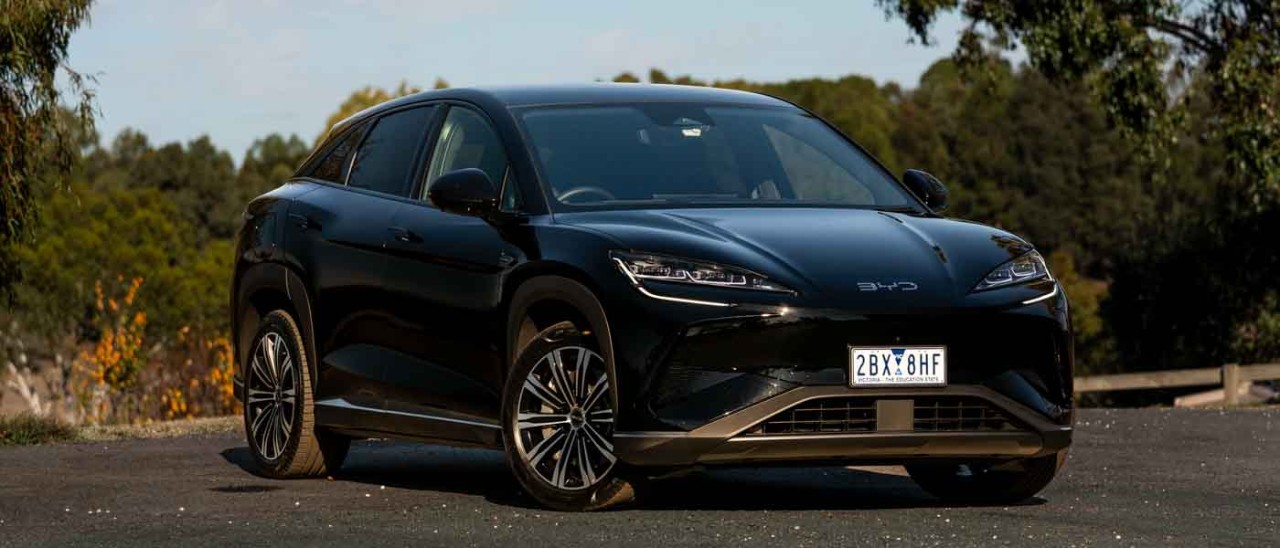
Australia now has more electric vehicle brands on sale than ever before. Brands such as Tesla, BYD, Kia, Geely, Zeekr, Jaecoo and MG account for the bulk of EV sales, driven by popular models like the Tesla Model Y and Model 3, BYD Sealion 7, Atto 3, Seal, Dolphin and Atto 2, Geely EX5 and Kia EV3 and EV5.
Together, Tesla and BYD made up more than half of all EV sales in Australia in 2025.
Chinese and new manufacturers have become a major force in the local EV market, increasing price competition and choice. For buyers, this means there are now credible EV options across most budgets and vehicle types — from small hatchbacks and SUVs to family mid-size SUVs.
Premium brands such as BMW, Mercedes‑Benz, Porsche, Volvo and Polestar, and legacy brands such as Subaru and Mazda are also expanding their electric line‑ups across varying body styles, while BYD’s premium brand Denza has launched its first two models, the Denza B5 and Denza B8, and has a long-term plan to become the market-leading luxury car brand in Australia.
Australia's best-selling electric cars, SUVs and utes
As of June 2026, Australia's best-selling electric vehicles are as follows:
New electric vehicles, SUVs and utes coming to Australia in 2026
As more models flood the market in 2026, Australian drivers have more electric vehicle choices than ever before. These are some highly-anticipated EVs arriving soon:
- Mazda 6e
- Mazda CX-6e
- BMW iX3
- Geely EX2
- GAC Aion UT
- MG4 EV Urban
- Subaru Uncharted
- Subaru Trailseeker
- Toyota Bz4x Touring
How to shop and compare EVs in Australia
RACV Car Match lets you compare electric vehicles side‑by‑side by price, range, size, features and estimated running costs, helping you create and narrow your shortlist with confidence.
Research & compare electric SUVs on sale today: prices, specs, features, running costs, safety
Real‑world EV range vs manufacturer claims
Driving range is one of the most misunderstood aspects of EV ownership. Official range figures are measured under standardised laboratory conditions and are best treated as a benchmark, not a guarantee.
Independent testing in Australia by the Australian Automobile Association (AAA) has shown that real‑world EV range can be between 5% and 23% lower than manufacturer claims depending on the model and conditions.
Read: Does your electric vehicle match its driving range claim?
Charging an electric vehicle
Charging at home
For most owners, home charging is the most convenient and cost‑effective way to run an EV. A dedicated home charger can charge up to three times faster than a standard power point. Combined with off‑peak electricity or solar, home charging is where most EV owners see the biggest savings.
Read: Home EV charging guide
Charging with solar power
If your home has rooftop solar, charging your EV using self‑generated electricity can significantly reduce running costs and reliance on the grid. This benefit can be even greater if your solar system is paired with a home battery, allowing you to store excess solar energy during the day and use it to charge your EV overnight. For many households, this combination can improve energy independence, reduce exposure to electricity price rises and make everyday EV ownership cheaper and more predictable.
Read: Charging an EV with solar
Read: Rebates and discounts to reduce the cost of solar
Public charging
Public chargers are increasingly common across cities, regional centres and major highways, making it easier to travel longer distances and charge away from home.
In Melbourne, EVX kerbside charging also supports drivers without off‑street parking or garages by providing convenient on‑street charging in selected areas.
Safety, testing and used EVs
EV safety and ANCAP ratings
From a vehicle safety perspective, a number of electric vehicles across popular segments such as medium SUVs and small SUVs were awarded the maximum five-star rating by ANCAP in its latest testing.
The latest 2026 Tesla Model Y SUV is deemed the safest car overall in Australia, achieving the highest weighted score of any vehicle assessed by the leading independent safety authority last year, while the Tesla Model 3 (2019-2023) became the first fully electric vehicle to be rated by the Monash University Accident Research Centre, achieving the maximum five stars for overall safety.
ANCAP safety ratings for new cars on sale in Australia can be found in RACV Car Match.
Read: Australia's safest electric vehicles
Driving an electric car - what's it like?
Electric vehicles drive differently to conventional cars. They’re quieter at low speeds and often accelerate more quickly, requiring extra awareness around pedestrians and cyclists.
Some EVs can be driven with a one-pedal mode. The best-selling EV in Australia, the Tesla Model Y, can also be optioned with supervised self-driving technology.
EVs can also feel different inside, with many models using larger infotainment screens for vehicle controls and information, and fewer traditional buttons. The packaging benefits of electric drivetrains can also create extra storage, such as front boots (frunks), and more usable cabin space thanks to flatter floors.
Read: What it’s like to drive an EV for the first time
Test driving an electric vehicle
A dealer test drive is an easy first step into EV consideration and is essential for understanding how electric vehicles feel and behave differently on the road. It allows you to experience features such as one‑pedal driving and regenerative braking, assess cabin technology and driver‑assistance systems, and see how real‑world acceleration, comfort and ride quality compare.
A test drive is also a good opportunity to explore EV‑specific features such as vehicle‑to‑load (V2L), where available, and to better understand how an electric car fits into your everyday driving.
Read: How to test drive an EV
Buying a used electric vehicle
Used EVs can offer strong value but require extra checks, particularly around battery health, remaining warranty coverage and software support. It’s also worth noting that, due to the rapid influx of new brands and models into the Australian car market, there may currently be more choice available brand new than used, with competitive pricing and longer warranties making a new EV a realistic alternative to buying second‑hand.
Read: What to know about buying a used electric car
Read: The best used electric cars and SUVs to buy
Read: The best car warranties available in Australia
Read: Best affordable and underrated used cars
EV ownership costs, finance and incentives
Finance and loan options for electric cars
Many Australians choose to finance an electric vehicle rather than pay upfront. A growing number of lenders now offer green or low‑emissions car loans for new and used EVs, which may come with competitive interest rates, reduced fees or other incentives compared with standard car loans.
When comparing EV finance options, it’s important to look beyond the advertised rate. Consider the total cost of the loan, repayment flexibility, loan term, eligibility criteria, and whether additional incentives apply for electric or low‑emissions vehicles, as these factors can have a significant impact on overall affordability.
Read: What is a green car loan for electric vehicles?
Read: How much can I borrow for a car loan?
Read: Novated lease vs car loan - what's best?
Read: How much should I spend on a car?
Government incentives for EVs in Australia
EV rebates and incentives vary by state and territory and can change over time.
Read: EV incentives and rebates
EV batteries: lifespan, care and safety
Modern EV batteries are designed to last many years, with gradual capacity loss over time.
Read: EV battery care and safety
EV running and ownership costs
Once charging becomes part of a regular routine, many electric vehicle owners find daily running costs can be lower and more predictable than those of petrol or diesel cars. Instead of fluctuating fuel prices, EVs are powered by electricity, which is generally cheaper per kilometre, especially when charging at home on off‑peak rates or by harnessing solar power.
Maintenance costs may also be reduced, as EVs typically have fewer moving parts, no oil changes and longer service intervals compared with internal combustion vehicles. However, running costs can vary significantly depending on the model, battery size, charging behaviour and electricity tariffs, making it important to research EVs in Australia and compare estimated running costs before buying.
Over time, drivers often adapt their habits to maximise efficiency, using smoother acceleration, regenerative braking and real‑time displays built into the vehicle to increase driving range.
Read: Car servicing costs and differences: EV vs Petrol vs Diesel
Read: Owning and charging an electric vehicle
Should you buy an EV now or wait?
Whether you should buy an EV now or wait depends on your personal circumstances rather than the technology alone. If your current car is older, less safe, a common theft target or expensive to fuel and maintain — particularly if you drive high kilometres each year — an EV may offer meaningful savings on running costs alongside improved safety features and a comfortable driving experience. Lifestyle factors also matter: predictable daily driving, access to home charging and the ability to charge overnight make EV ownership easier and cheaper.
Affordability is another key consideration. Falling EV prices, increased competition from new brands and available incentives mean many models are now within reach of mainstream budgets, while rising petrol prices can impact the break‑even point for drivers who drive regularly.
More: Are electric vehicles harder to steal?
More: Australia's most stolen cars
Electric vehicle FAQs (Australia)
Manufacturer range figures are tested under standard conditions. Real‑world range can be lower depending on speed, temperature, terrain and driving style. Australian Automobile Association testing shows this difference can be meaningful and should be factored into buying decisions.
Most EVs can be charged from a standard power point, but a dedicated home charger is faster and better suited to regular charging.
EV batteries degrade gradually over time rather than failing suddenly. Most new EVs come with long battery warranties, often around eight years.
EVs must meet the same safety standards as petrol cars. Because they are quieter and accelerate quickly, drivers should take extra care around pedestrians and bike riders, particularly at low speeds.
Quick links
- Compare EVs by price, size, range, features and ANCAP Rating (RACV Car Match)
- Cheapest electric cars in Australia right now
- Best electric cars and SUVs in Australia
- Safest affordable electric cars in Australia
- Real‑world EV range vs manufacturer claims
- Charging an EV at home and on the road
- Installing a home EV charger
- EV battery care, lifespan and safety
- Test driving an EV
- Buying a used electric vehicle
- EV finance and incentives
- Guide to one-pedal driving in an EV
- Guide to Vehicle-to-Load technology
- Kia's EV range in Australia compared
- Subaru's EV range in Australia compared
- Insurance for EVs in Australia: what you need to know
The information provided is general advice only. Before making any decisions please consider your own circumstances and the Product Disclosure Statement and Target Market Determinations. For copies, visit racv.com.au. As distributor, RACV Insurance Services Pty Ltd AFS Licence No. 230039 receives commission for each policy sold or renewed. Product(s) issued by Insurance Manufacturers of Australia Pty Ltd ABN 93 004 208 084 AFS Licence No. 227678.


