We've recently reviewed and updated our Privacy Charter, which describes how we use cookies and other technologies to understand and improve your browsing experience. By using our site, you agree to us collecting this information and to our Privacy Charter.
You’ll be sent the latest news, exclusive offers and competitions to your inbox.
Review
2026 Honda Super-One review
Terry Martin
October 09, 2026
The Honda Super-One is a lot of fun, but the Japanese brand’s first EV in Australia comes with trade-offs that temper its appeal.
Honda’s first electric car in Australia has arrived in the form of the tiny, boxy Honda Super-One – a retro and oh-so-cool antidote from Japan that’s markedly different from most other affordable EVs now humming around our neighbourhoods.
It’s not as cheap as the cheapest EVs and is asking would-be owners to accept quite a few compromises in order to get themselves into this reconfigured Japanese kei car.
But if the heart thumps loud enough to drown out the voices of reason, this might just be the electric transport and personal style embellishment you’ve been waiting for.
2026 Geely EX2 first drive | 🔎 RACV car reviews video
How much does the Honda Super-One cost and how does it compare?
Unmoved as EV deals get sharper among its rivals with each passing week, the 2026 Honda Super-One remains firm at the price announced in August: $36,900 drive-away.
There’s just a single specification, with premium exterior colour – two-tone purple with a black roof – the only means to shell out a bit more at the checkout (+$500). The standard body colours are monotone black, grey and purple.
Where just a couple of months ago, this price looked competitive with a range of EV hatchbacks, intense competition has seen Chinese brands raise the bar with their retail offers. The BYD Atto 1, for example, is currently priced at $19,990 drive-away – making it one of Australia’s cheapest new cars – while the larger BYD Dolphin opens at $28,888 drive-away.
Other alternatives include the Geely EX2 (from $29,807 drive-away for Victorian private buyers), MG4 EV Urban (from $29,990 drive-away), GAC Aion UT (from $31,990 drive-away) and Leapmotor B05 (from $35,990 drive-away). For something with a similarly retro feel or vaguely comparable styling, there’s also the Hyundai Inster (from $35,990 drive-away) and Abarth 500e (from $43,990 drive-away).
Feature-for-feature, the Honda Super-One can’t match its cheaper EV rivals, but the value equation becomes a little more complex when adding in street chic and fun features like its power Boost mode.
If you order one today, delivery will not take place until sometime during the first half of 2027 – with a monotone colour; the two-tone purple extends the wait into the second half. The first batch of 130 vehicles was sold out in a matter of hours (these will reach customers from October 2026), while another 120 or so firm orders are also locked in for early next year. Unless Honda Australia receives a higher allocation, that leaves about 250 cars available for the remainder of 2027.
The Super-One is covered by a five-year/unlimited-kilometre factory warranty, with a separate eight-year/160,000km term for the high-voltage battery. Service intervals are every 12 months or 15,000km (whichever comes first), capped at $199 for the first five years when going through Honda’s authorised retail/service network of around 85 outlets nationwide.
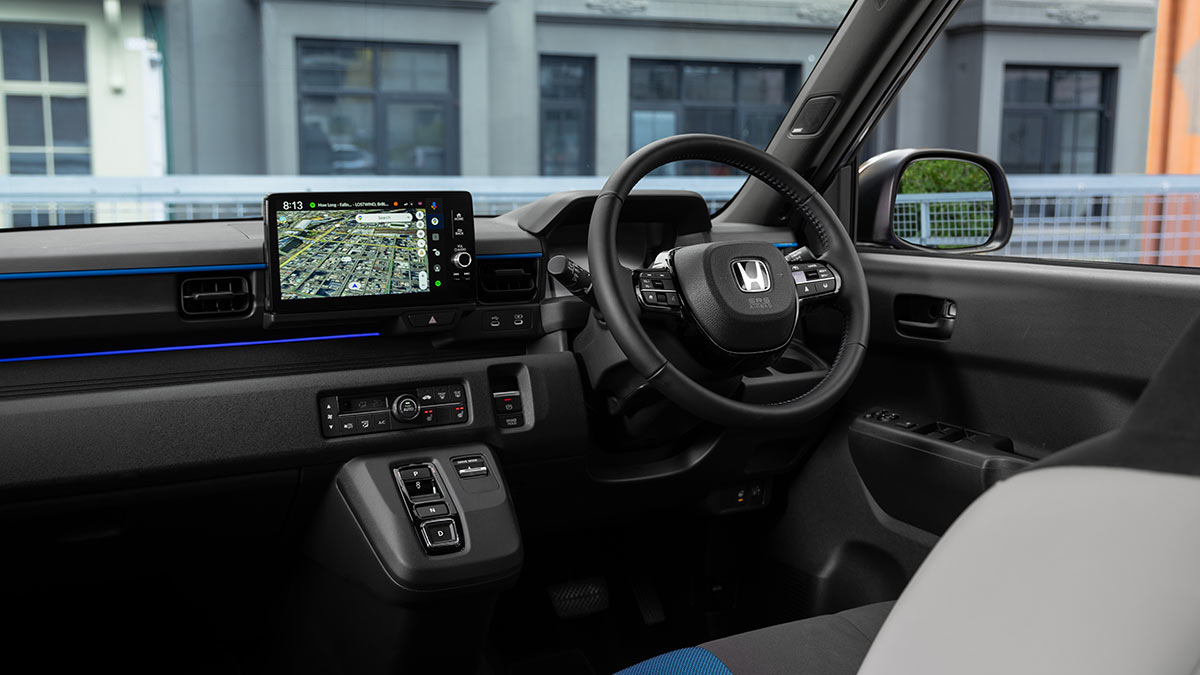
Honda Super-One has a practical, retro dash layout with a modest central touchscreen.
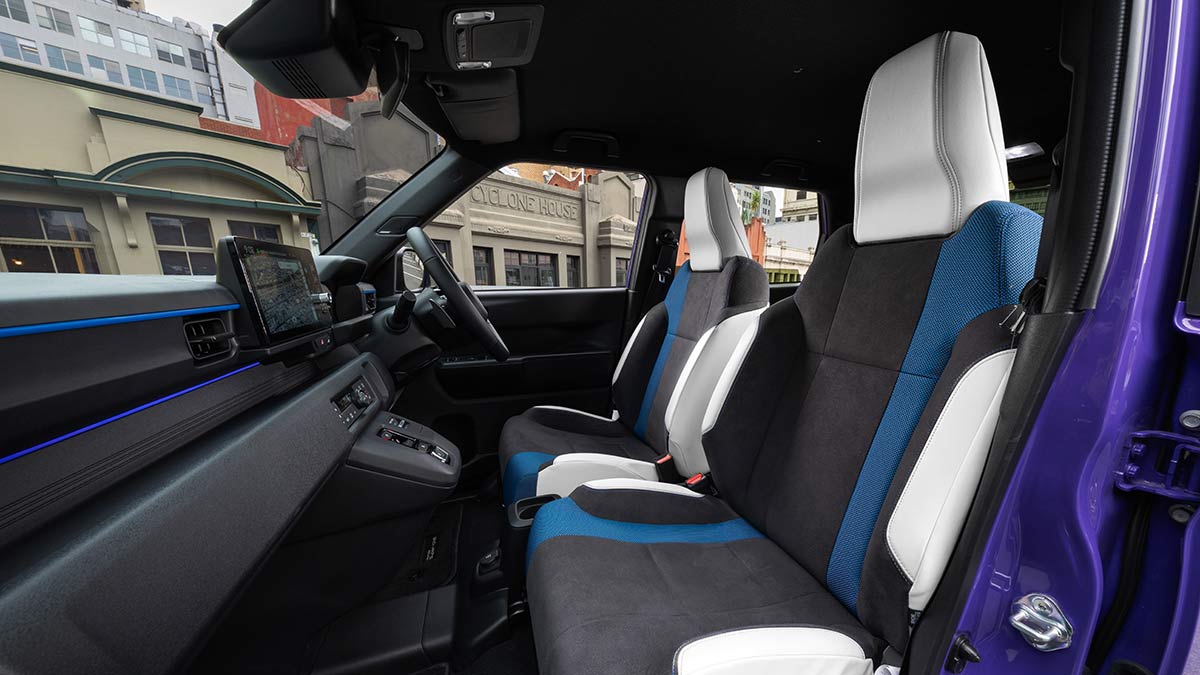
The Honda Super-One has sporty bucket seats up front with a mix of leather and cloth trim.
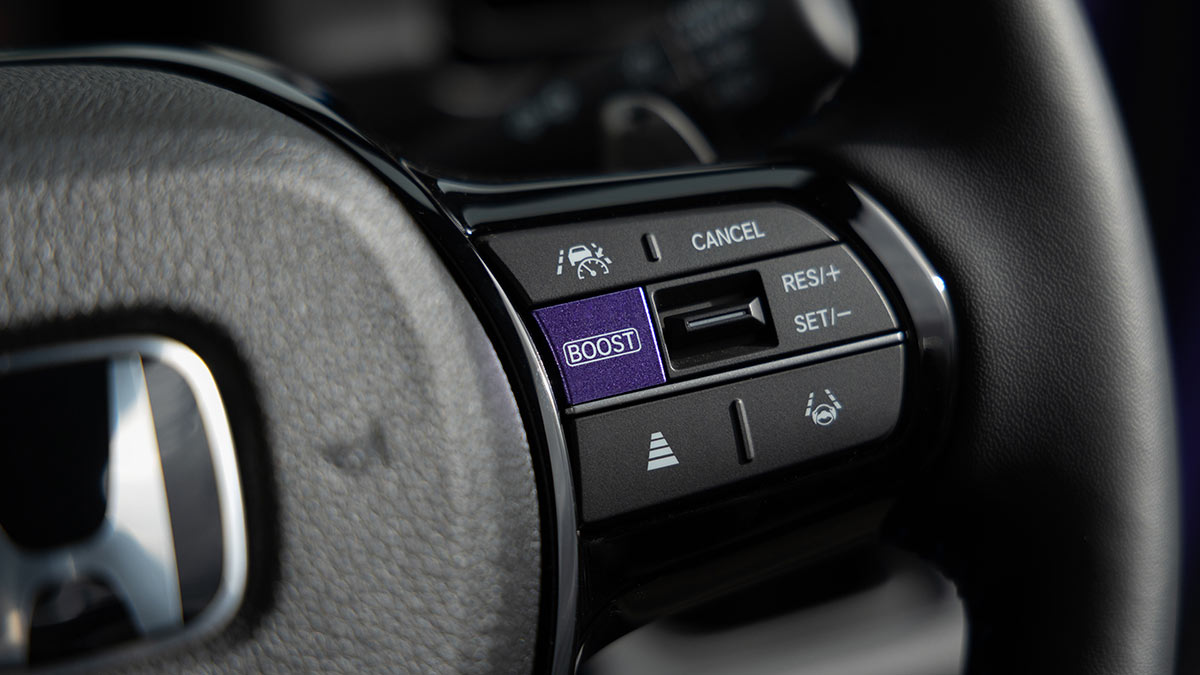
Among tactile steering controls on the Honda Super-One is the evocative Boost mode.
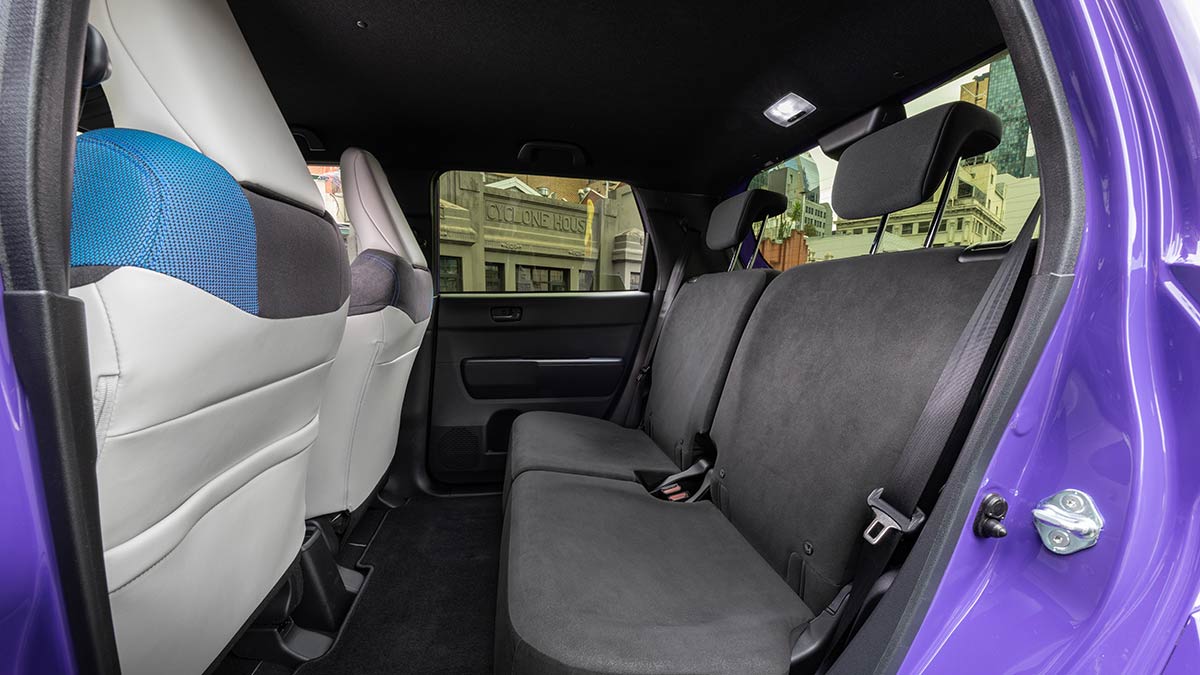
Two seats in the back of Honda Super-One, where it’s not as super-tight as you might think.
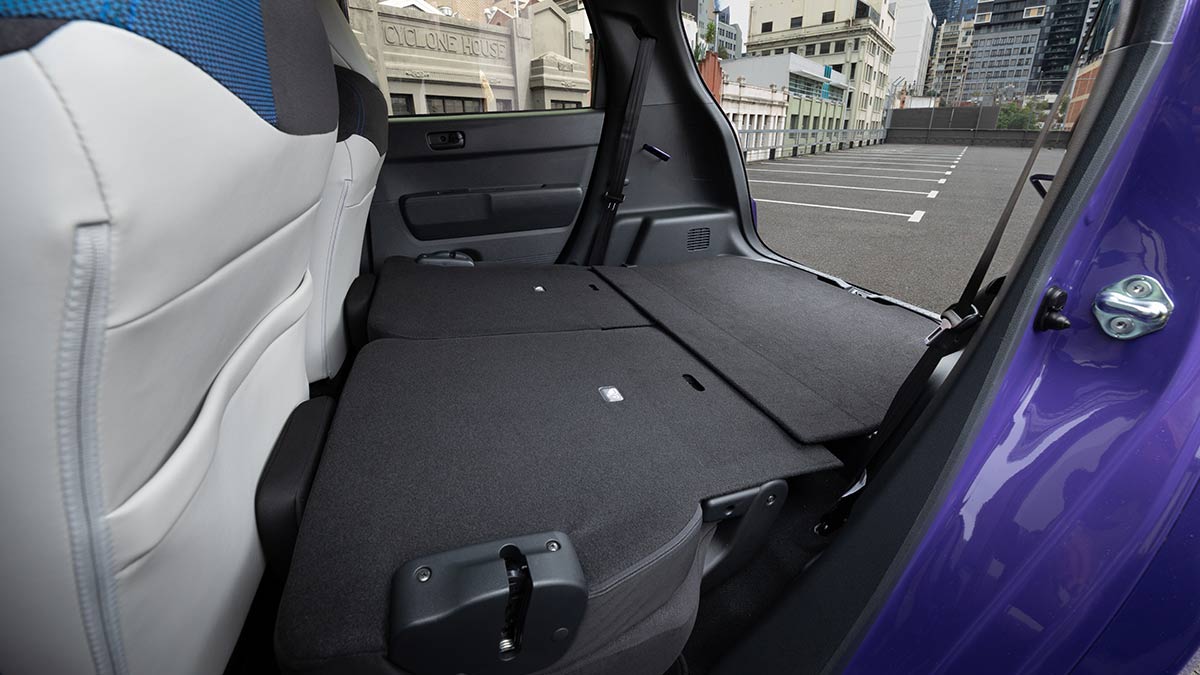
Flexible seating helps maximise cargo space in the tiny Honda Super-One.
1 of 5
What is the Honda Super-One like inside and out?
The four-seater 2026 Honda Super-One is based on a Japanese kei car, the N-One, but the strict guidelines governing the standard domestic car (dimensions, power output, etc) can be relaxed a little for export markets like Australia.
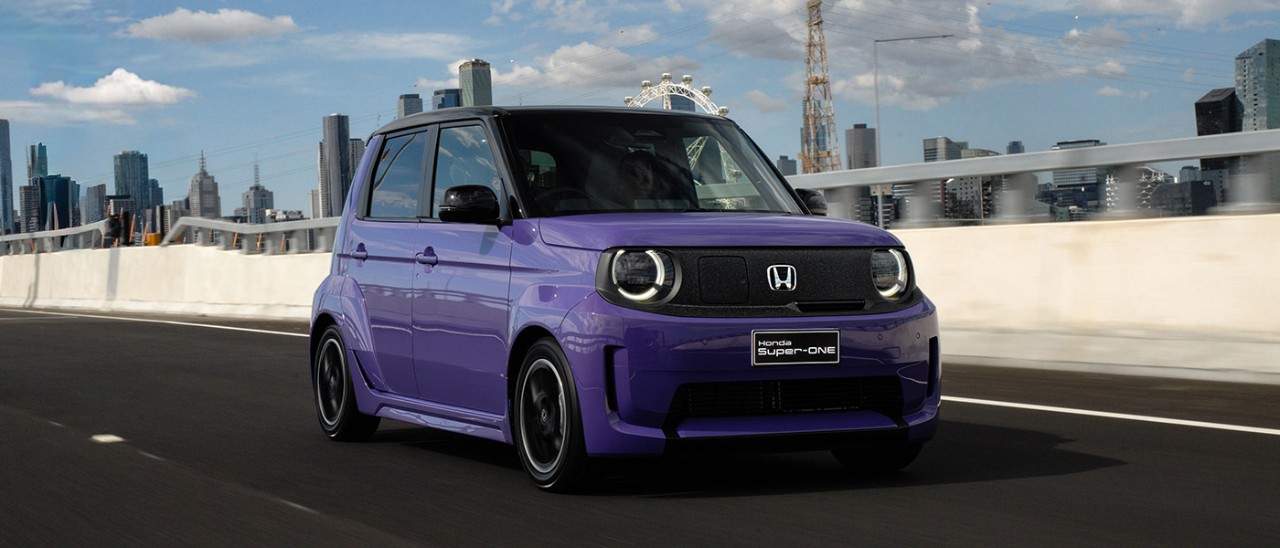
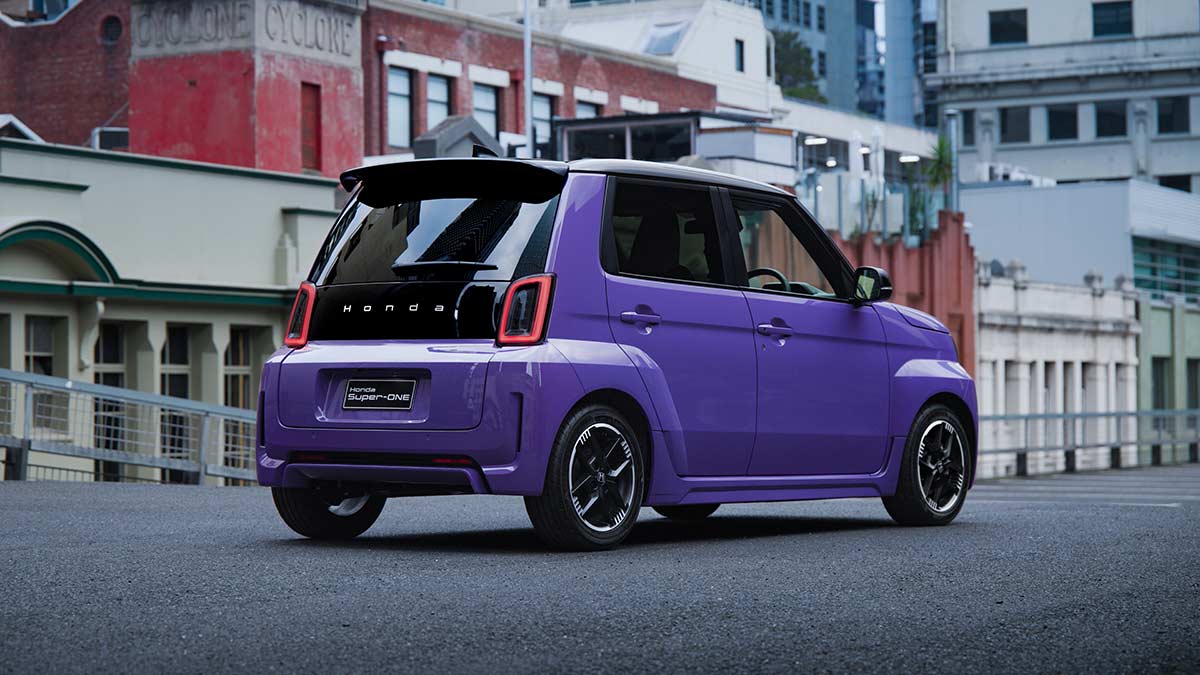
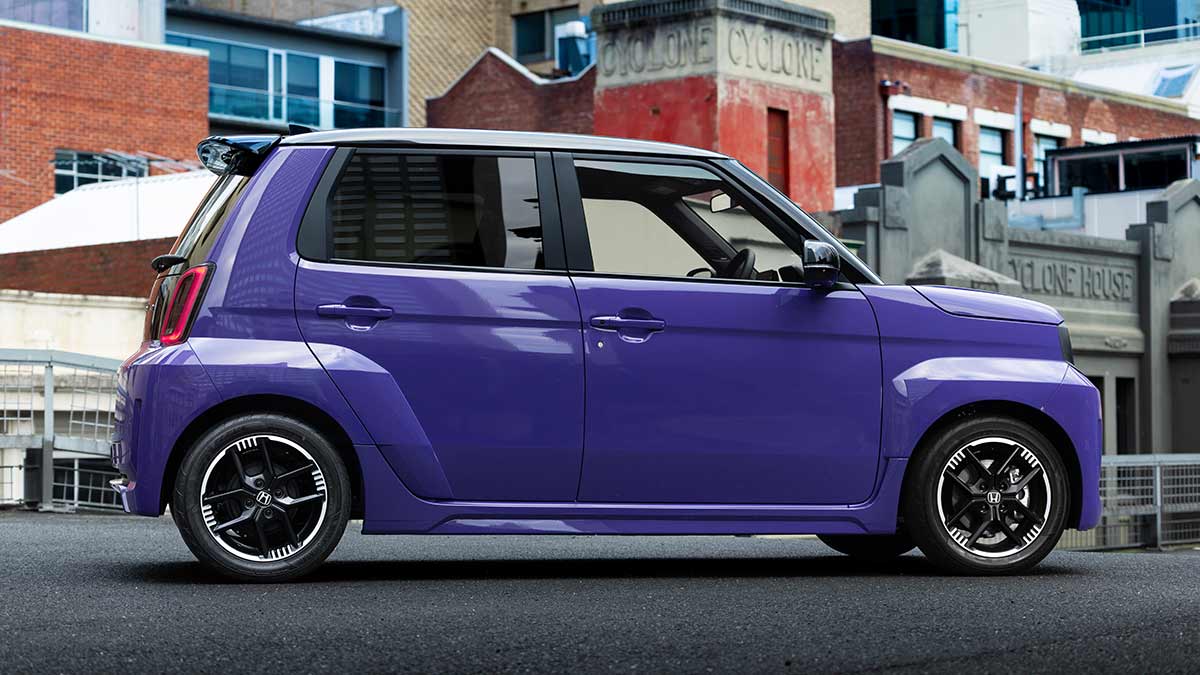
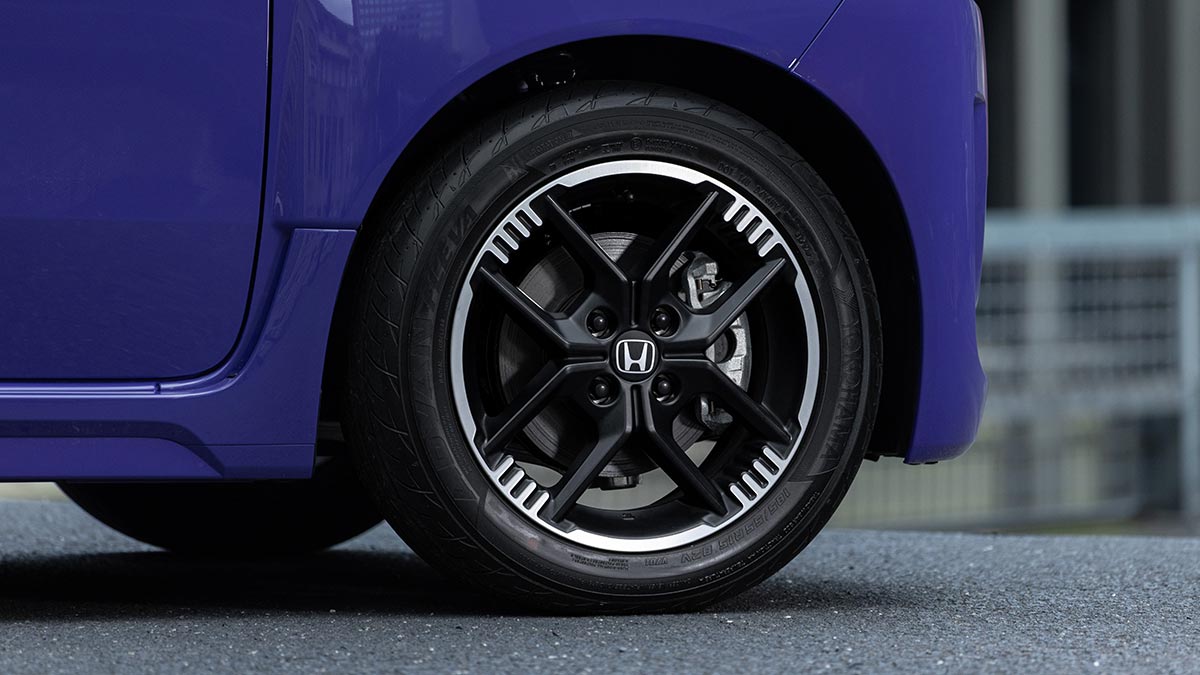
The appealing ultra-compact, squared-off shape remains, but Honda’s designers have drawn inspiration from the 1980s City Turbo II to create the Super-One, which has a muscular look with its wider stance, aggressive front aero elements, bulging wheelarches, larger 15-inch alloy wheels and a big roof spoiler hanging off the back end.
Just as the circular headlights are a nod to the City Turbo, the Super-One’s cabin has a retro feel amid a decent amount of tech, owing to its donor kei car origins and some lovely attention to detail. The cowled instrument binnacle with faux analogue gauges on the 7.0-inch digital screen is a case in point, but there’s no better example than the (single-zone) climate control panel that evokes a good old-fashioned cassette deck. If only it was real, we’d have our tapes dug out from the shed and lined up on the dashboard ledge in a flash.
As it stands, Honda’s EV makes do with a small 9.0-inch infotainment touchscreen that combines with Google Built In, wireless Apple CarPlay/Android Auto, connected services (Honda Connect) and a crisp eight-speaker Bose stereo.
You’ll get no complaints from me with Honda’s insistence on keeping a knob for volume adjustment (and on/off), large close-at-hand buttons and switches on the console, and familiar simple-to-use controls around the steering.
The front sport bucket seats won’t suit everyone – the thick bolstering digs a little too hard into this driver’s thighs, for example – but the sporting intent is clear and the driving position (including liberal seat and steering wheel adjustment) is good. We’re not pleased with the omission of seatbelt sash height adjustment, while electric seat adjustment isn’t on the menu.
There’s not much in the way of storage options throughout the cabin, and no Vehicle to Load (V2L) functionality for running small appliances and the like.
In the back, there’s two seats and more room than you might expect – a good deal of headroom, shoulder-room and foot space, but legroom depends on where the front occupant places their seat. Amenities are scarce; no rear air vents or charging points, for example, and just a bottle holder in the door that fits a Japanese ramune soda, but a bigger Aussie flask?
What’s neat is how the two rear bench seat portions flip up to create a useful cargo area behind the front seats. The seatbacks also fold forward to create an almost-flat floor, extending the restrictive standard luggage volume from 162 litres with the seats upright to a more useable 618L (to the window line; 967L to the roof).
The light above the rear bench doubles as a boot light and, so it seems, it’s all deemed too tight in the cargo area to include features like tie-down hooks, shopping bag holders and a spare wheel. The stereo subwoofer lies under the floor, along with a puncture repair kit and just enough space for a charging cable.
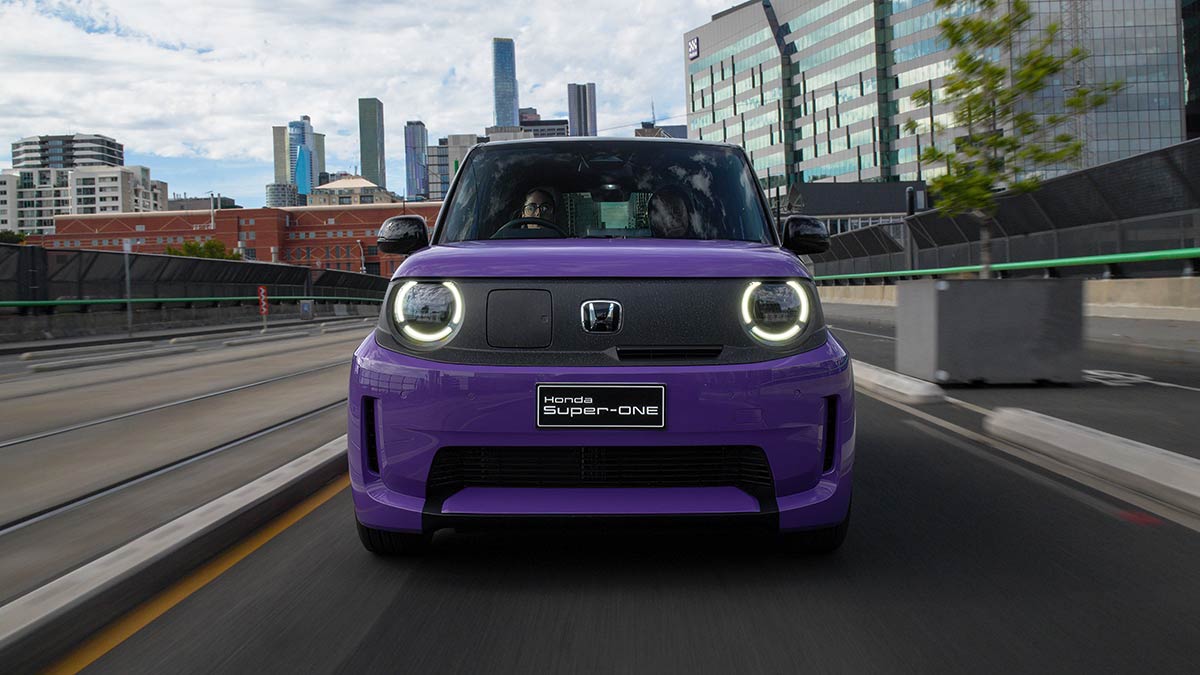
The Honda Super-One is right at home in the inner city.
Boxy retro looks and a purple paint job draw lots of attention to the Honda Super-One.
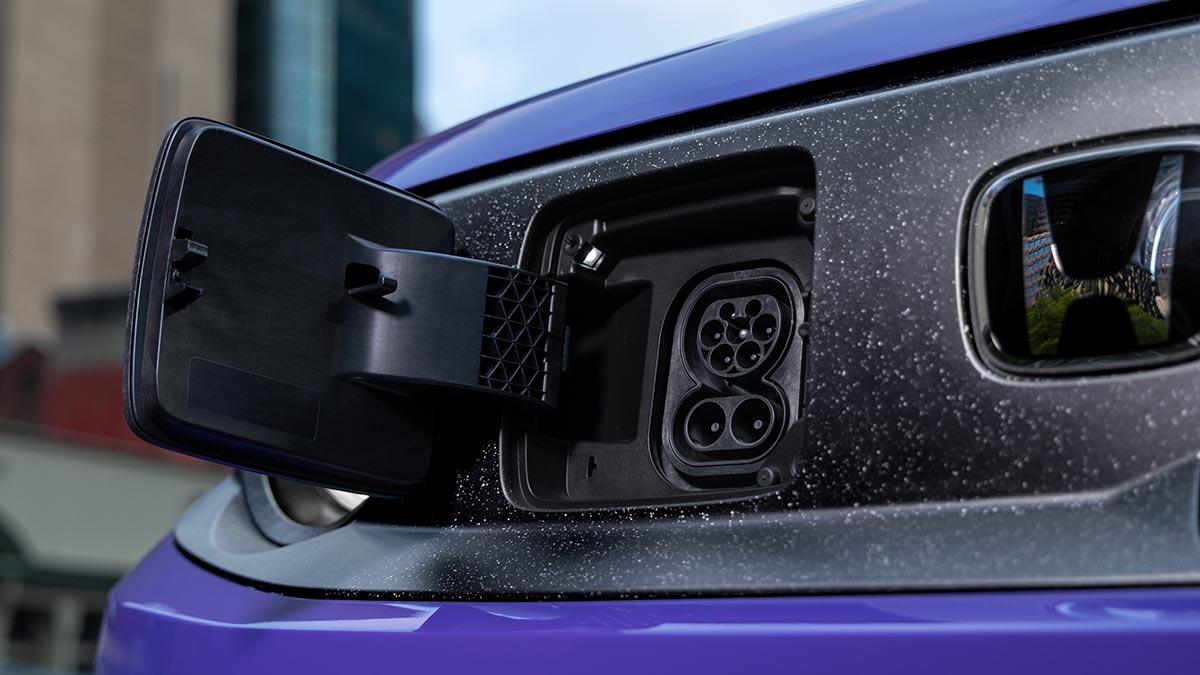
Front-mounted charging port for the Honda Super-One EV.
Honda Super-One has 15-inch alloy wheels with Yokohama tyres.
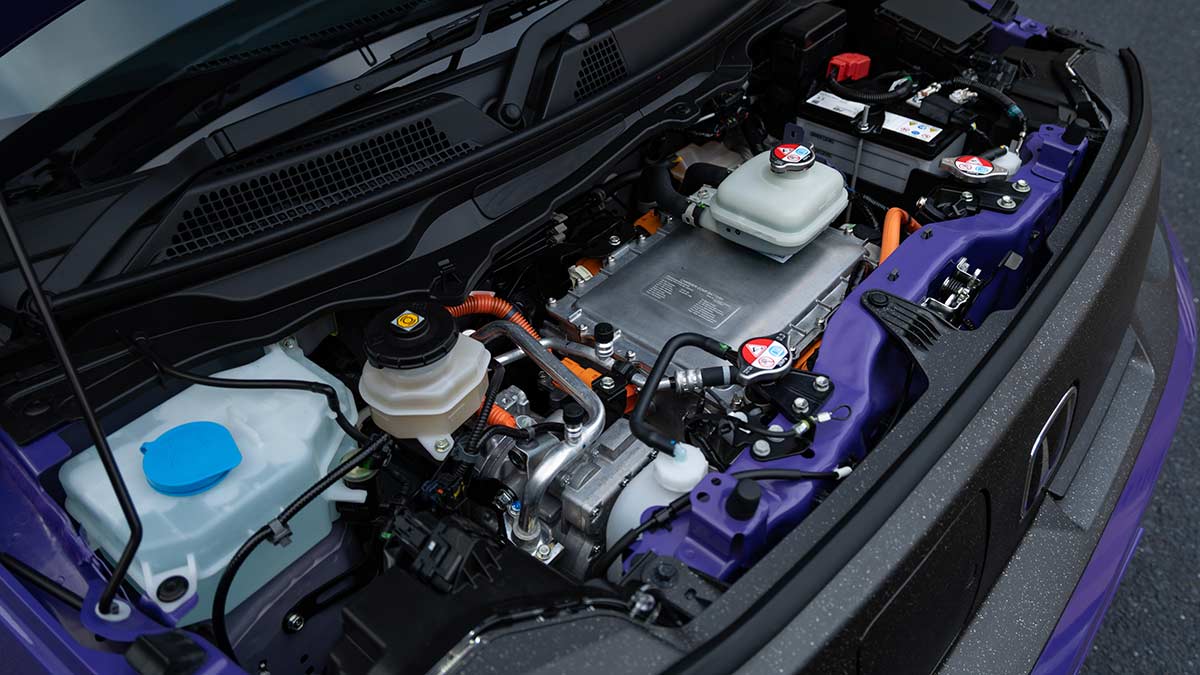
No frunk for Honda Super-One, with the powertrain taking up under-bonnet space.
1 of 5
How does the 2026 Honda Super One drive?
Just as Honda’s designers were given scope to tweak the donor kei car to create an EV that evokes the 1983 City Turbo II, its engineers were given licence to upscale performance to deliver us the 2026 Super-One.
Some significant chassis work was carried out, bringing wider wheel tracks, unique front strut/rear beam axle suspension tuning, beefier rear drum brakes, a larger 15-inch wheel-and-tyre combo, quicker-ratio steering and significant structural reinforcements, all designed to improve the car’s handling without compromising on ride comfort.
Driving the front wheels, the single-motor powertrain (and related software) was also revised to improve acceleration, responsiveness and, intriguingly, the sensory experience with a so-called Boost mode.
Hit the purple button on the steering wheel and power shoots up from a paltry 47kW to 70kW, perking up the car’s performance and dialling up the fun factor with a pseudo seven-speed automatic simulation and associated theatrics: fake engine noises pumped through the stereo, manual paddle ‘gear’ shifts, laugh-out-loud moments when bouncing off the would-be ‘rev’ limiter.
This small purple patch in the Super-One’s performance also turns a shade of violet on the pinstripe lighting and in the instrument cluster, where old-school dials show up for counting ‘rpm’ and watching kilowatts and battery temperature rise.
It’s a bag of fun, but there’s also a sense that Honda is pretending the Super-One is somehow not an EV – when it should be embracing it.
As well as a rapid-fire means to run down the battery, the novel booster shot also masks some obvious shortfalls in the car’s performance. Based on the near-identical UK spec, the claimed 0-100km/h acceleration for the Super-One is a lacklustre 14.5 seconds – brought down in Boost mode to a more acceptable, though still humdrum, 10 seconds flat.
Our short first drive was limited to thick Melbourne CBD traffic and a snarling inner-suburban peak hour, so questions remain over how the Super-One manages a broader scope of driving conditions and speeds. Of course, this is the natural environment of Honda’s first EV, which never feels like a pocket rocket from behind the wheel, despite its relatively light 1093kg kerb weight, but takes most things in its stride.
We like the one-pedal driving brought with City mode, which can be finetuned with adjustable regen levels via the steering paddles. (The paddles only work as pseudo gear shifters in Sport and Boost modes.)
Elsewhere, the Super-One feels composed through corners, the ride is absorbent over chopped-up bitumen, the turning circle is a tight 10.4m and its compact size is perfect for slotting into narrow parking spaces.
For driving range, the official claim is 202km on the lab-based WLTP combined cycle, which again reinforces the Super-One’s city centricity. The 29.6kWh battery’s capacity should be sufficient for an urban dweller, presenting few (if any) issues when there’s access to convenient charging at home – ideally with a dedicated EV charger – or a public fast-charging station.
But even modest day trips where higher speeds are involved will require careful planning and potentially multiple charging stops. The last thing you want is for anxiousness over range to override the fun factor inherent in this car.
The 2026 Honda Super-One EV was built for megacities like Tokyo, but manages Melbourne with ease.
How safe is the 2026 Honda Super-One?
This is a question that’s hard to answer when there’s no safety rating for the 2026 Honda Super-One – and might never materialise. Honda Australia has no plans to offer its first EV up for independent crash testing and broader assessment, so it will be up to ANCAP to decide whether to wear the full costs of testing such a relatively low-volume car. For time being, it goes unrated.
Honda says the Super-One is the first car of its size to feature the brand’s post-collision braking system, which automatically applies the brakes in the event of a collision. The EV also comes with automatic collision notification with emergency call (eCall). However, there’s no SOS button in the car from which occupants can contact, and communicate with, an emergency response centre. Instead, eCalls are only possible via the owner’s smartphone, whether they’re in the car or not.
The driver assist tech suite includes common electronic aids like forward collision warning, lane keep assist, traffic jam assist and adaptive cruise control. There were no aggressive interventions during our short Melbourne CBD and inner-suburban first drive, so fingers crossed the calibration testing undertaken prior to launch has made a good fist of things in this area.
Elsewhere, the Super-One is fitted with six airbags and carries child restraint anchor points (top tether strap and ISOFIX) for both rear seats.
Megacities like Tokyo are the natural habitat of the 2026 Honda Super-One, but our first drive has demonstrated that it nonetheless fits into a Melbourne context. Of course, the tiny EV fits in anywhere!
A purchase decision, however, will be driven more by emotion than logic, such is the lure of its cool kei car origins and the limitations brought with the Super-One’s size, seating capacity and driving range, for example, and the price premium it carries over its electric hatch rivals.
2026 BYD Atto 1 first drive | 🔎 RACV car reviews video
The information provided is general advice only. Before making any decisions please consider your own circumstances and the Product Disclosure Statement and Target Market Determinations. For copies, visit racv.com.au. As distributor, RACV Insurance Services Pty Ltd AFS Licence No. 230039 receives commission for each policy sold or renewed. Product(s) issued by Insurance Manufacturers of Australia Pty Ltd ABN 93 004 208 084 AFS Licence No. 227678.
Want more articles like this?
Subscribe to RACV News for advice on cars, safety, home and travel.