
Buyers have flocked to EVs and hybrid cars, including PHEVs, in the first half of 2026, seeking out SUV bargains from affordable Chinese brands like BYD and Chery as Toyota, Ford and others have struggled. Here’s a full wrap on Australian new vehicle sales.
Motoring
Most searched cars revealed: affordable EVs lead
Discover the most searched cars on RACV Car Match, with affordable EVs from BYD and MG dominating as Australians look to reduce driving costs.
Affordable electric vehicles (EVs) are dominating car searches as Australian motorists look for ways to reduce their running costs amid renewed pressure at the petrol bowser.
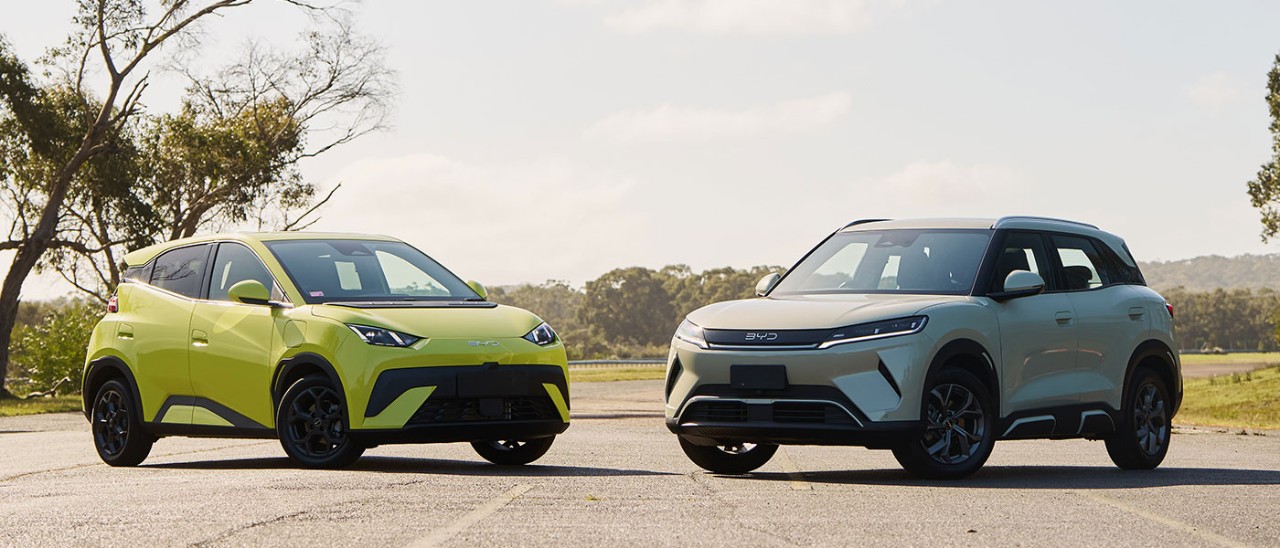
The latest data from RACV Car Match shows EVs from BYD and MG have claimed all five of the most searched car spots over the past five months, coinciding with uncertainty around fuel prices and the arrival of new and more affordable EVs.
The results reflect the growing presence of more affordable EV brands in Australia's new-car market and suggest price-conscious motorists are increasingly considering electric alternatives.
What are the most searched cars on RACV Car Match?
Launched in 2025, RACV Car Match brings RACV's motoring expertise together in one platform to help Australians research, compare and evaluate vehicles before buying.
The BYD Atto 2 is currently the most searched vehicle on RACV Car Match, with a starting price of just under $36,244 drive away according to Car Match data.
These results align with a significant acceleration in Australian EV demand during the same period. Battery-electric vehicles reached a record 23.3 per cent of new-vehicle sales in June, while first-half EV sales were up 120 per cent year-on-year.
Affordability also appears increasingly important. The BYD Atto 1, BYD Atto 2, BYD Dolphin, MG4 and Leapmotor B10 all sit toward the affordable end of Australia's EV market. The Atto 1 in particular pushed the EV starting price down to territory much closer to conventional small cars.
There's also a pronounced shift towards Chinese manufacturers. Eight of these 10 models are from Chinese brands; only the Kia EV3 and Tesla Model Y aren't. BYD alone accounts for five of the top six.
What are the most searched brands on Car Match?
In April-June 2026, the top 10 most searched brands or makes on RACV Car Match were:
- BYD – BYD offers several relatively affordable EVs alongside plug-in hybrids, putting it at the intersection of three major buyer interests: price, fuel costs and electrification. The new BYD Atto 3 Evo has also just arrived to give the brand a fresh SUV option.
- Toyota - Toyota remains Australia's biggest-selling brand, so high search interest isn't surprising. Its broad range covers everything from small cars and SUVs to hybrids and utes, meaning it naturally appears on many buyers' consideration lists. The launch of a new Toyota RAV4 PHEV and new Toyota bZ4X Touring is likely to push interest higher.
- Hyundai - Hyundai is an established mainstream brand with petrol, hybrid and electric vehicles across popular segments.
- MG - MG has established itself as a value-oriented mainstream brand. The MG4 also sits among Australia's more affordable EV choices, which makes the brand particularly relevant to buyers comparing the cost of switching to electric.
- Kia - Kia combines a large mainstream customer base with an expanding range of hybrid and electric vehicles, including the popular EV3 and EV5 SUVs.
- Chery - Chery's competitive pricing, new models and growing visibility is likely encouraging comparison searches.
- GWM - GWM has built significant Australian sales through SUVs and utes and is now expanding its electrified offerings.
- Leapmotor - Leapmotor is much newer and less familiar to Australian motorists, so people encountering the brand may be more likely to research its cars, pricing, specifications and credentials before considering one. Its focus on relatively affordable electrified vehicles also aligns with the EV search trend on RACV Car Match.
- Geely - Geely's rapid emergence onto the Australian car market has generated significant research interest. The Geely EX5 has quickly become a significant EV seller.
- Mazda - Mazda remains one of Australia's largest car brands, naturally inspiring a solid amount of searches.
Car Match users appear to be researching both established high-volume brands and newer Chinese brands associated with affordability and electrification. It's important to remember that search rankings aren't the same as sales rankings, so newer brands may also benefit from consumers wanting to learn more about unfamiliar vehicles before buying.
Six of the 10 most searched brands – BYD, MG, Chery, GWM, Leapmotor and Geely – are also Chinese brands. That corresponds with a major structural change in Australia's new-car market. Chinese-built vehicles accounted for almost one-third of new-car sales in 2026's first half (which includes cars such as the top-selling Tesla Model Y), while Chinese brands are increasingly competing around price, technology and electrified powertrains.
The broader market supports that interpretation. In the first half of 2026, China overtook Japan as Australia's biggest source of new vehicles, with Chinese-built cars accounting for 31 per cent of new-car sales. BYD was Australia's second-highest-selling brand behind Toyota, while GWM and Chery were also in the sales top 10.
At the same time, established brands Toyota, Hyundai, Kia and Mazda remain heavily researched, suggesting shoppers aren't necessarily abandoning familiar manufacturers: they're comparison-shopping them against a rapidly expanding group of challengers.
Why are EVs the most searched cars on RACV Car Match?
RACV Head of Policy James Williams said RACV Car Match search data points to a meaningful shift in what Australians were considering when choosing their next vehicle.
"Cost of living and a desire to find cheaper ways to stay on the road is top of mind for Australians, and we're seeing how that is changing our local car market and consumer preferences," Williams says.
"Manufacturers such as BYD and MG have become major players in the Australian market as motorists increasingly prioritise value for money, technology and safety features with ongoing pressure at the bowser pushing more everyday Victorians to electric."
Upfront EV prices have traditionally been one of the barriers to switching from a petrol or diesel vehicle. The arrival of more EVs around the $30,000 price point is giving buyers a wider range of options when comparing new cars.
More: Australia's cheapest electric cars and SUVs
More: Australia's cheapest plug-in hybrid cars
What to consider before buying an EV
While purchase price and potential running-cost savings are important considerations, motorists should make sure an EV suits their everyday driving needs before making the switch.
"Before purchasing an EV, we encourage motorists to look beyond the cost and ensure their vehicle is a long-term lifestyle match. Consider how and where your EV will charge, differences in driving style and driving range, and safety features," Williams says.
"RACV Car Match provides a great starting point for consumers, letting buyers compare price, specification, safety ratings and estimated running costs in one place before they commit."
More: Australia's safest medium SUVs
More: Australia's safest small SUVs
Quick links
- Compare EVs by price, size, range, features and ANCAP Rating (RACV Car Match)
- Cheapest electric cars in Australia right now
- Best electric cars and SUVs in Australia
- Safest affordable electric cars in Australia
- Real‑world EV range vs manufacturer claims
- Charging an EV at home and on the road
- Installing a home EV charger
- EV battery care, lifespan and safety
- Test driving an EV
- Buying a used electric vehicle
- EV finance and incentives
- Guide to one-pedal driving in an EV
- Guide to Vehicle-to-Load technology
- Kia's EV range in Australia compared
- Subaru's EV range in Australia compared

