We've recently reviewed and updated our Privacy Charter, which describes how we use cookies and other technologies to understand and improve your browsing experience. By using our site, you agree to us collecting this information and to our Privacy Charter.
You’ll be sent the latest news, exclusive offers and competitions to your inbox.
Review
2026 BYD Shark 6 Performance review
Terry Martin
May 28, 2026
The BYD Shark 6 Performance answers key criticisms levelled at the popular plug-in hybrid dual-cab ute, including the need for a higher towing capacity and better off-road capability. But are they worth the extra outlay?
The BYD Shark 6 has been a phenomenal success in Australia, racking up more than 23,000 sales since launching just 15 months ago to challenge the Ford Ranger, Toyota HiLux and other big guns in class like no other ute has ever done before – with a single model variant and a plug-in hybrid powertrain.
This success has seen Australia become the number one market worldwide for the Shark 6 PHEV, handing BYD’s local engineering team significant influence in China for ongoing development – which in turn has given rise to the more powerful and capable 2026 BYD Shark 6 Performance.
Arriving alongside the new Shark 6 Cab Chassis, the Shark 6 Performance responds to shortcomings found in the continuing Premium model, including the need for a higher 3500kg towing limit and better off-road capabilities. It also brings a raft of detail changes inside the dual cab, which is sure to divide opinion.
For an extra $5000 over the Shark 6 Premium, at first glance the Shark 6 Performance looks to be the BYD ute we’ve been waiting for. But is it? Let’s take a closer look.
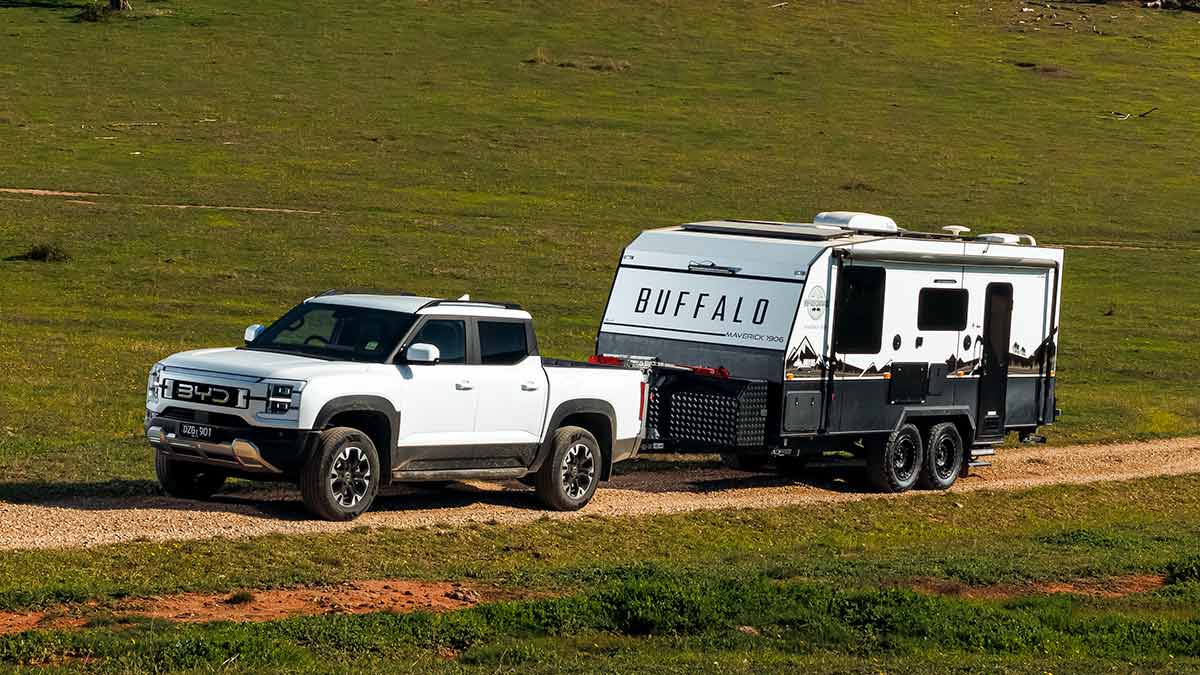
The 2026 BYD Shark 6 Performance has a higher 3500kg towing capacity compared to the Premium (2500kg).
How much does the 2026 BYD Shark 6 Performance cost?
Priced from $62,900 plus on-road costs – or $66,744 drive-away for Victorian private buyers – the 2026 BYD Shark 6 Performance starts $5000 above the Shark 6 Premium (from $57,900 plus ORCs) but brings a more powerful 2.0-litre plug-in hybrid powertrain into the equation.
It also debuts a range of updates such as Crawl mode, Google Automotive Services and a new centre console and steering wheel that are set to be introduced as running changes to the Premium, as well as the just-launched Shark 6 Cab Chassis Dynamic (from $55,900 plus ORCs) and other variants in the pipeline.
Grey White is the standard body colour, with Outback Orange, Deep Sea Blue and Tidal Black metallic options available for an extra $700. A broad range of accessories are offered, from sportier 18-inch alloy wheel rims ($1406) and roof racks ($1913) to bull bars (from $4249) and sports bars (from $1382).
The Shark 6 is covered by BYD Australia’s six-year/150,000km new vehicle warranty and separate eight-year/160,000km high-voltage battery warranty. Service intervals and capped price servicing costs for the Performance mirror the Premium at every 12 months or 20,000km (whichever comes first), averaging $497.80 at each visit for the first five years/100,000km (total: $2489).
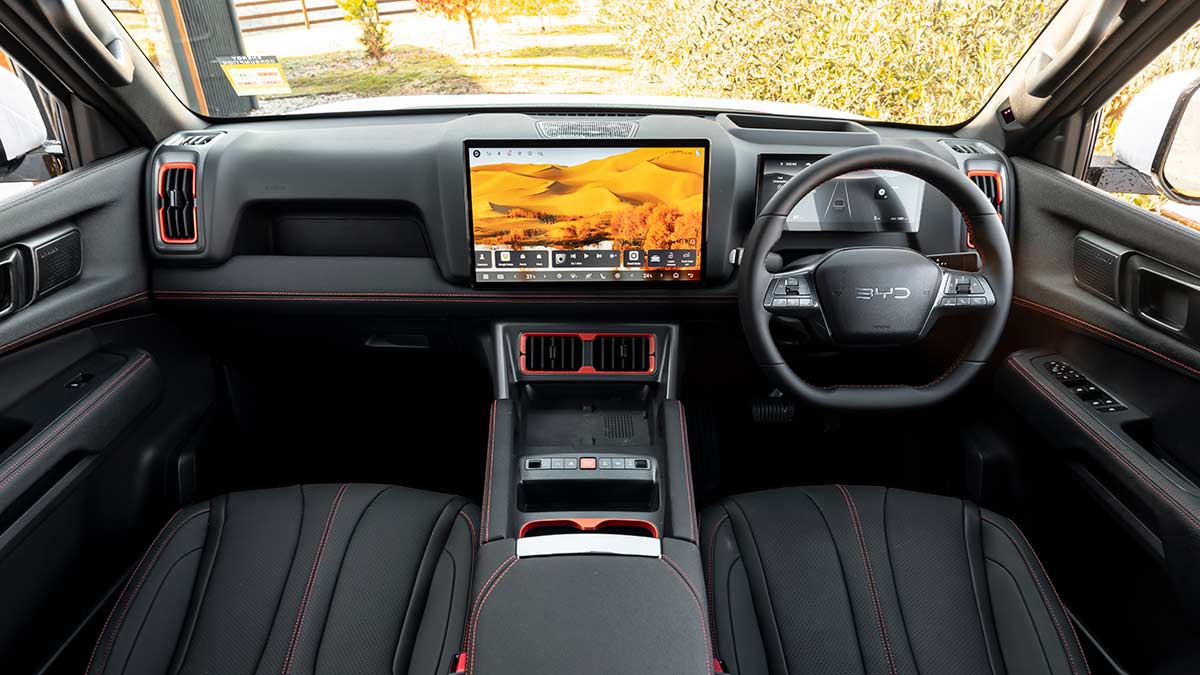
The 2026 BYD Shark 6 Performance interior is familiar, but with key differences.
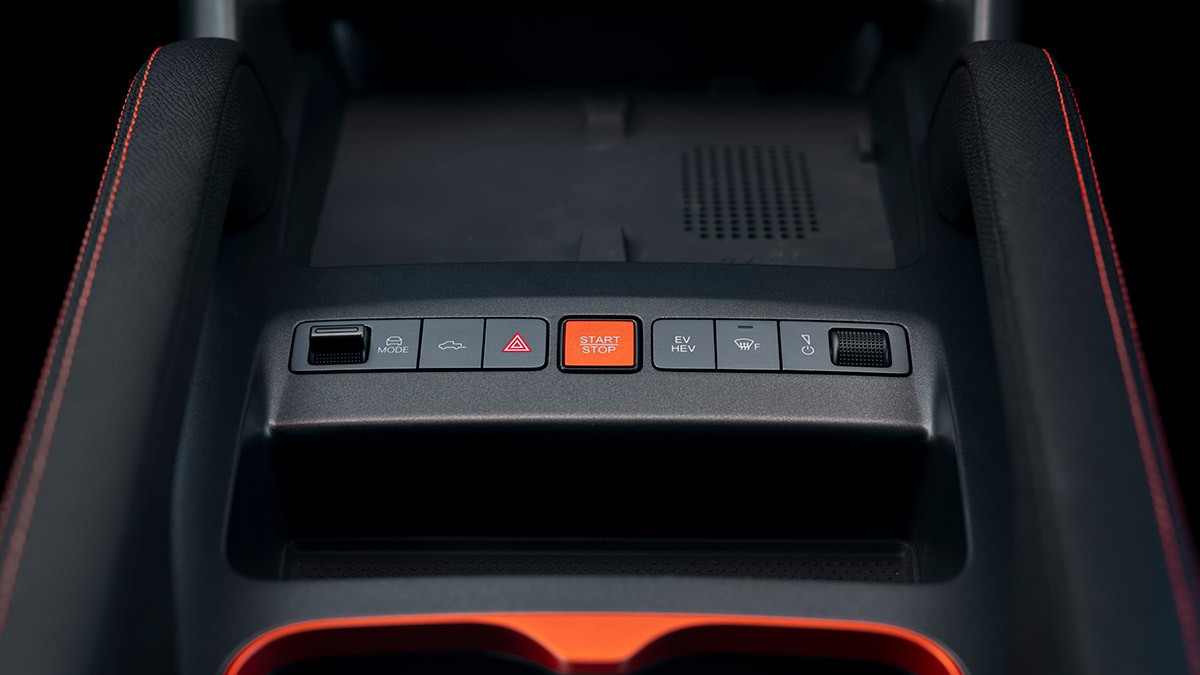
The new minimalist centre console on the BYD Shark 6 Performance.
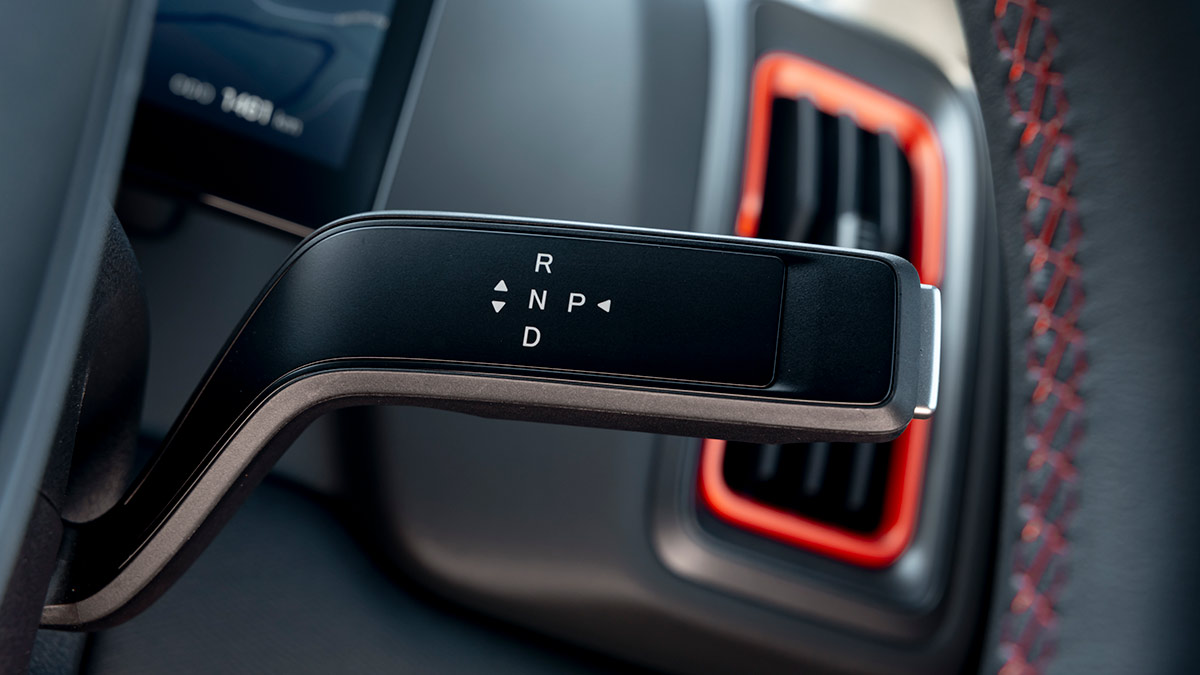
The transmission lever for the BYD Shark 6 Performance is now on the steering wheel.
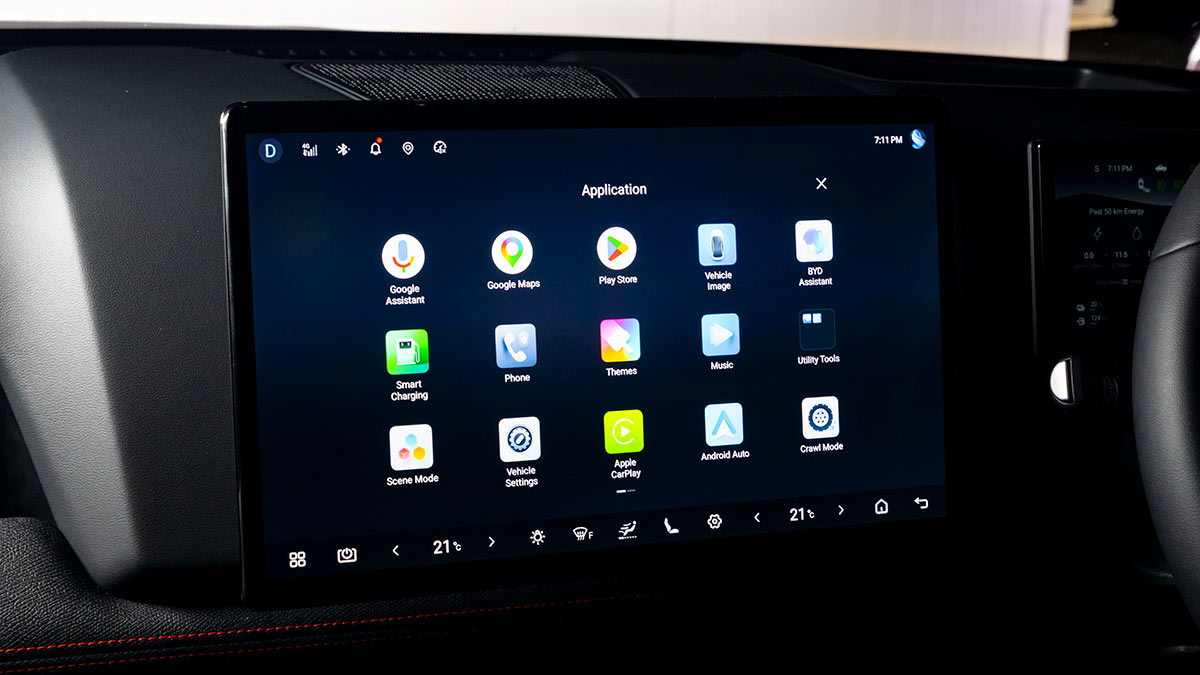
Google apps are embedded into the BYD Shark 6 Performance infotainment system.
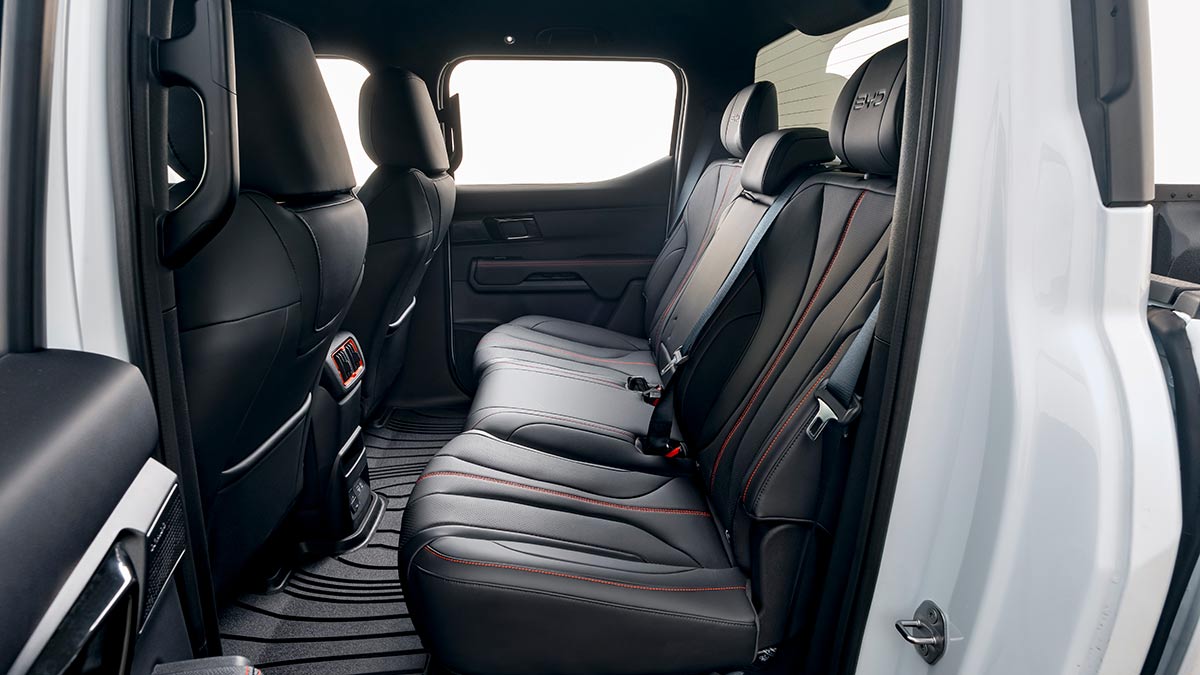
Spacious rear seat in the BYD Shark 6 Performance, with dark synthetic leather trim.
1 of 5
What is the new BYD Shark 6 Performance like inside?
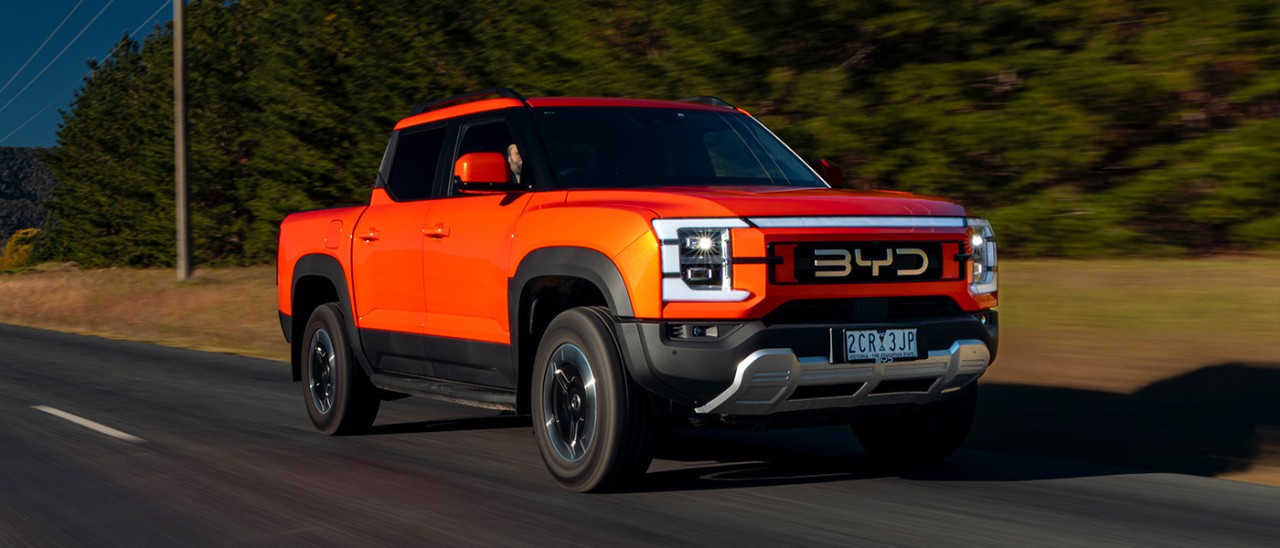
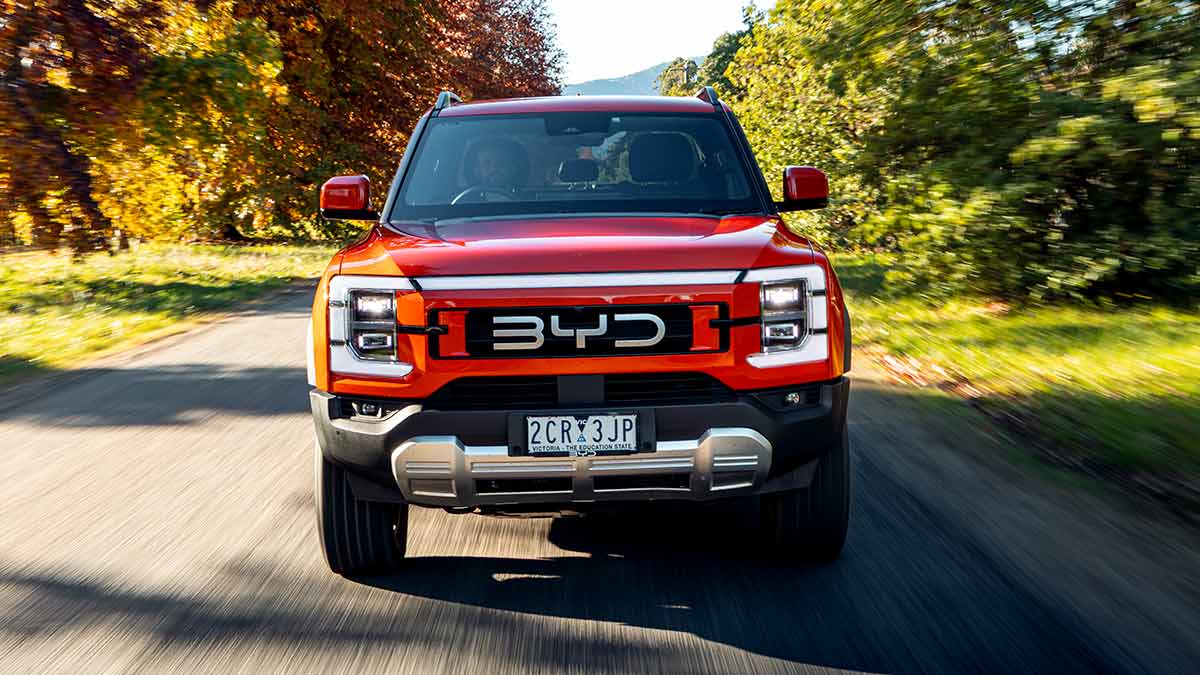
Looking identical to the Shark 6 Premium from the outside, the 2026 BYD Shark 6 Performance has some significant departure points in the spacious twin cab compared to the original.
The most obvious of these is the redesigned centre console that dispenses with the chunky transmission lever as well as the big, blocky and tactile aircraft-style buttons for key functions such as start/stop, EV/HEV mode, hazard lights, electric park brake, tailgate release and hill descent control.
The gear shifter is now in the form of a wand on the right-hand side of the steering wheel, which also means the indicators are now operated from the left, not right – creating an issue for us (and other drivers, no doubt) used to a lever on the other side!
The handy driving mode switchgear on the tiller has also been relocated to a new line of smaller buttons on the console, where most of the previous controls remain but a few are moved into touchscreen menus, where drilling into the screen takes time and can serve as a distraction.
The overall result is cleaner and creates an extra small, open storage space in between the mobile phone charging pad and cup holders. But it does take gloss off the Shark’s tough truck appeal.
Elsewhere, the Performance also loses genuine leather trim on the steering wheel, and the centre screen is no longer able to rotate into a portrait position – a neat party trick but one that hasn’t been able to integrate smoothly with Apple CarPlay or Android Auto and a range of third-party apps.
On that front, the Performance also introduces Google Automotive Services, which is embedded in the car’s hardware (so a phone connection isn’t needed) and incorporates Google Maps, Google Assistant (‘Hey Google’ voice controls for various vehicle functions) and the Google Play Store, the latter in turn opening up other apps that can run on the vehicle’s hardware.
BYD has confirmed to RACV that the cabin modifications found on Shark 6 Performance can be expected to filter down into the Shark 6 Premium and other variants as running changes before too long, so any detractors had better get in quick.
Indeed, the mods have sent some online Shark 6 owners’ forums into meltdown, but let’s not overlook the bigger picture here.
For example, the driver is seated in a supportive and comfortable seat, complete with a broad range of electric adjustment (including lumbar) and heating/ventilation settings. The steering wheel has a good range of adjustment and still includes important switchgear. Crucial information is well presented via the head-up display, 10.25-inch instrument cluster and the 15.6-inch central touchscreen.
There’s some decent computing power behind that touchscreen, which flits through menus with speed, and good clarity that comes with appealing graphics and thoughtful design.
The Shark 6 Performance (and Premium) equipment levels are quite outstanding for the purchase price, whether it’s the tech suite or creature comforts like dual-zone climate control. There’s high attention to detail in materials used, general storage facilities and the room provided in the front and rear cab sections.
I reckon BYD would answer it critics along the lines of: “You can’t halt progress.” As much as the older layout still appeals, we’d suggest the interior tweaks don’t come close to being deal breakers.
But here’s a memo to HQ: The electric tailgate button operated from either the cabin or the back end drops too fast. That could be the reason behind the need to press an OK button on the touchscreen warning “Please pay attention to pedestrians behind” when sitting inside the cab. An alteration to the mechanism is needed.
BYD says the Shark 6 Performance is more economical than the Premium when it has a load onboard.
Is the new BYD Shark 6 Performance good to drive?
As the new name indicates, the 2026 BYD Shark 6 Performance moves up a notch in the driving department with its bigger 2.0-litre turbo plug-in hybrid powertrain that pumps out 350kW of power and 700Nm of torque (combined petrol/electric) – up from 321kW/650Nm in the 1.5-litre-based Shark 6 Premium.
These are incremental gains that compensate for the extra weight in the Shark 6 Performance – which tips the scales at a hefty 2775kg – and improve acceleration from a standing start and responsiveness overall. The official 0-100km/h claim is 5.5 seconds, two tenths quicker than the Premium and said to be best in class for PHEV utes.
It’s a small but noticeable improvement when driving the 2.0-litre and 1.5-litre powerplants back-to-back (unladen), but the 1.5 PHEV is no slouch when there’s not much weight loaded into either the cabin or tray.
The 2.0-litre EV-oriented powertrain proves to be a fine accompaniment to the excellent on-road driving manners and refinement we’ve come to appreciate in Shark 6, which, unlike most utes, uses a fully independent suspension front and rear. That might create issues in some conditions or applications but driving two-up without a load on rough and lumpy Victorian backroads, the Shark 6 Performance was stable, quiet and comfortable enough, although the ride is on the firm side.
Wind noise off the mirrors is the biggest intrusion at higher speed, and there’s some unsettlement in that firm ride over uneven bitumen surfaces, reinforcing the fact that this is a ute, not an SUV.
Fuel consumption averaged 9.6L/100km on our first drive, which was a relatively short open-road tour in petrol-electric HEV mode. You’ll get much better figures in lower-speed urban environments with EV mode in full swing; on one vehicle we tested, which had spent a lot more time in EV mode, the average economy across 1275km was 6.6L/100km.
When there’s heavier loads involved, BYD says the Shark 6 Performance should return lower figures than the Premium because the higher-output 2.0-litre engine is working in concert with a larger motor-generator to charge the high-voltage battery faster and more efficiently. The new model also gets upgraded brakes and revised dampers, but, again, it’s more to do with managing the extra weight rather than turning this into a high-performance weapon.
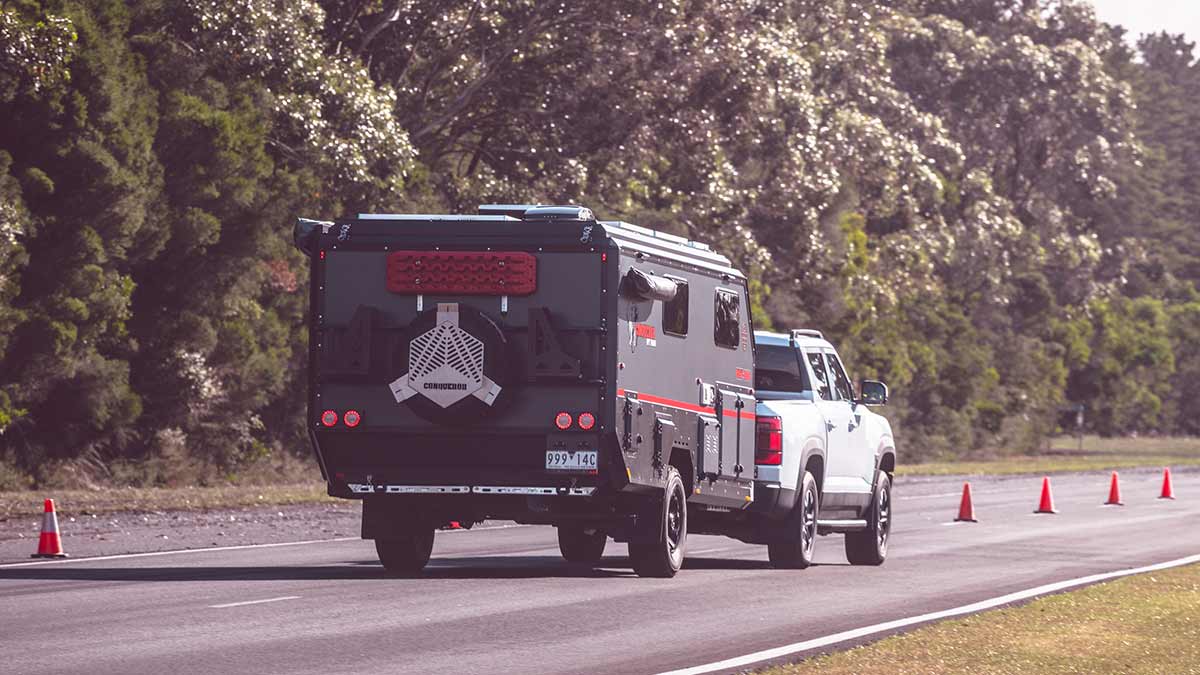
Lane change manoeuvres with a large caravan demonstrated how the BYD Shark 6 Performance can handle the higher 3.5t towing capacity.
Is the BYD Shark 6 Performance better at towing and carrying loads?
A major selling point with the 2026 BYD Shark 6 Performance is its 3500kg maximum braked towing capacity, up from 2500kg in the Premium. This opens the Shark up to a broader audience of caravanners and other users with heavier towing and trailer load requirements.
We pulled a caravan at the new limit in controlled proving ground conditions, where the Shark 6 Performance had no trouble building up speed to 100km/h, neatly blending electric-first and second-tier petrol power that kicks in smoothly from about 70km/h. The ute felt stable in wide corners, maintained good control in quick lane change manoeuvres at around 80km/h and easily handled emergency stops from highway speeds.
Fuel economy with the van hitched up came in at an 18L/100km, which isn’t bad at all, though a proper towing test on public roads is needed to gain a clearer picture.
For the record, the maximum front axle load on the Shark 6 Performance is 1700kg (+49kg on Premium) and the rear axle limit is 1900kg (-27kg). Gross combined mass (GCM) is 6650kg (+900kg) while gross vehicle mass (GVM) holds firm at 3500kg. Maximum tow ball download is 350kg (+100kg).
The Shark 6 Performance has the same 1200-litre tub capacity as the Premium – complete with multiple 230V outlets with its Vehicle to Load (V2L) capability – but the extra kerb weight (+65kg) at 2775kg means the maximum payload drops to 725kg – down from 790kg on the Premium. For prospective owners, that’s worth careful consideration.
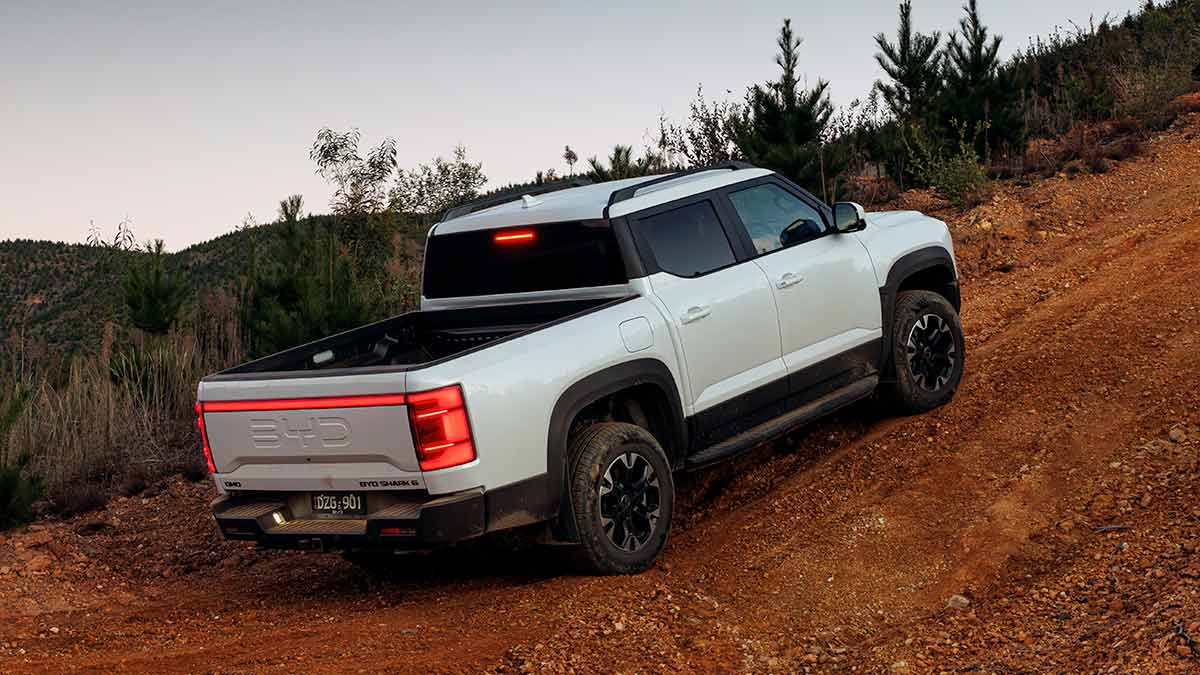
The new Crawl mode helps the BYD Shark 6 Performance off-road, but its effectiveness is limited.
Is the new BYD Shark 6 Performance better off-road?
Just as the 2.5-tonne towing limit on the Shark 6 Premium has been a limiting factor, BYD’s ute has copped some criticism for its off-road capabilities.
The Shark 6 Premium and the new Shark 6 Performance both have a tough ladder frame chassis, standard 230mm ground clearance, 700mm wading depth and a suite of off-road electronics – from hill descent control (HDC) to various terrain modes like Mud, Sand, Snow and Mountain. However, there’s no low range gearing, no locking differentials, no mechanical connection at all between the front and rear wheels, and the use of independent rear suspension can be limiting with less wheel travel, for example.
In response, BYD has developed a new Crawl mode for the Shark 6 for the Australian market, debuting on the Performance and to be added to the Premium and Cab Chassis via an over-the-air (OTA) update later this year. Sitting above Mountain mode as a closer electronic ‘substitute’ for low range, Crawl mode limits speed to a maximum 12km/h and constantly adjusts torque to keep the wheels moving without spinning out.
That’s the theory, at least, as there were times during our proving ground testing when the Shark 6 Performance – fitted with its standard 265/65R18 Continental tyres – couldn’t find enough traction to get up a steep gravel or muddy incline on the first attempt. Second attempts were completed, though, and comparing Mountain with Crawl mode on a slippery and deeply rutted track did show the latter to be a clear improvement.
Crawl mode doesn’t work on downhill slopes, requiring HDC, but we did find an apparent software glitch where both HDC and Crawl mode can appear to be engaged at the same time, only to have the ute begin a quick descent without HDC assistance. BYD engineers have advised that this should be a simple fix via an OTA update.
Our experience reinforced the point that Shark’s reliance on electronics does limit its potential off-road. We didn’t have the chance to test the new ‘Tug of War’ function that comes with Crawl mode, which is designed to maintain traction when escaping mudholes or other situations, but we’re not convinced by BYD’s “total control” mantra for its terrain mode improvements.
Crawl mode is a welcome addition but isn’t a game changer for Shark’s handy, but limited, off-road performance.
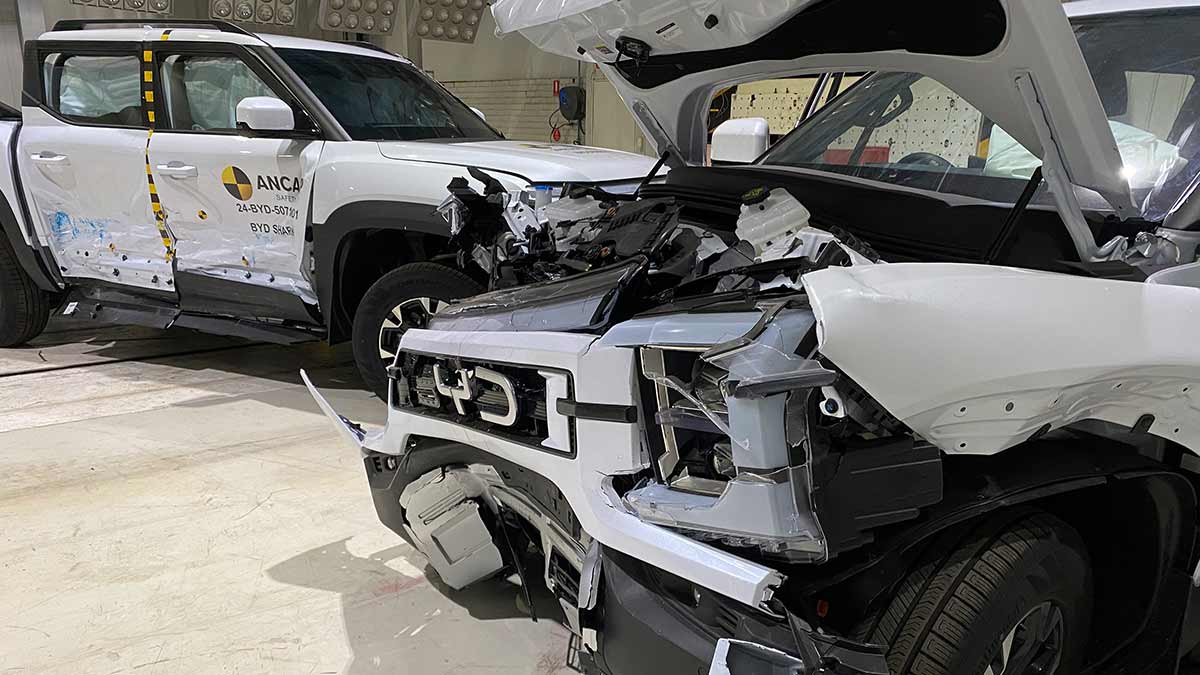
Two BYD Shark 6 utes after being crash-tested as part of their ANCAP safety assessment.
How safe is the BYD Shark 6 Performance?
The 2026 BYD Shark 6 Performance maintains the maximum five-star ANCAP safety rating awarded to the Shark 6 Premium in 2025, with the newcomer’s result based on that original testing.
Safety equipment in the Performance mirrors the specification of the Premium, meaning seven airbags and a broad array of advanced driver assistance systems (ADAS) including:
Autonomous emergency braking (AEB)
Active cruise control
Intelligent speed limit information and control
Lane departure warning and prevention, lane keep assist
Front and rear collision warning
Front and rear cross traffic alert and braking
Blind spot detection
Door open warning
Child presence detection
Driver fatigue and attention monitoring
The Shark 6 has a super-crisp high-resolution 360-degree view camera and front and rear parking sensors. The head-up display helps keep the driver’s eyes on the road, but the vehicle’s overzealous driver attention monitoring system is a prime example where better calibration is needed. It’s far too quick to prompt a warning, which in turn could encourage the driver to switch it off.
The BYD app allows remote services such as checking charge status, cabin temperature control, door lock/unlock and vehicle location. However, Shark 6 is not yet fitted with automatic collision notification and an emergency call system (eCall). BYD Australia chief operating officer Stephen Collins told RACV that he expects eCall to eventually filter through to the entire BYD model range, including the ute line-up.
BYD Shark 6 vs Ford Ranger PHEV | 🔎 RACV car reviews video
How does the BYD Shark 6 Performance compare?
The BYD Shark 6 was the nation’s fourth best-selling 4x4 ute in 2025 behind the Ford Ranger, Toyota HiLux and Isuzu D-Max, while to the end of April 2026 it’s sitting fifth behind the Mitsubishi Triton. Given Shark’s success, these rival brands all need to consider BYD’s influence on their patch where PHEV utes have become a bona fide segment – and in which BYD holds a dominant 70% share.
At $62,900 plus on-road costs (66,744 drive-away in Victoria), the 2026 BYD Shark 6 Performance is a genuine rival for traditional diesel and newer electrified – PHEV and EV – dual cabs, including the biggest sellers.
Alternative-fuel competitors include the GWM Cannon Alpha PHEV (from $54,490 drive-away), KGM Musso EV (from $60,000 drive-away), the expensive new Toyota HiLux EV (from $81,533 drive-away) and, not least of all, the Ford Ranger PHEV that held an opening price of more than $78,000 but was recently discounted to $62,000 drive-away to better match the Shark 6.
Ranger PHEV will soon drop further to $59,000 drive-away for the 2026.5 model year with a new entry-level XL variant, while the better-equipped Wildtrak (which is a closer spec to Shark 6) will start from $70,000 drive-away. Other electrified utes on the horizon include the still-to-be-named Chery diesel PHEV ute, an EV version of the MG U9 and the JAC Hunter PHEV.
The 2026 BYD Shark 6 Performance succeeds in taking the Chinese brand’s ute to a higher level in terms of towing capabilities and, to a less tangible extent, off-road touring. It gains weight in the process, losing out in payload and limiting the performance improvements overall.
For many, including those towing lighter loads, the cheaper Shark 6 Premium will do just fine and BYD Australia expects that 55 per cent of buyers will continue to opt for this model, leaving 25 per cent for the Performance and the balance for the new Cab Chassis.
The lure of the best-in-class diesel utes, including Ranger and HiLux, also remains strong, but the Shark 6 Performance shows BYD is listening to the Australian market and taking action. It’s a great-value recreational ute for owners who can take full advantage of its EV orientation, keeping fuel costs down while providing lots of practical benefits.
The information provided is general advice only. Before making any decisions please consider your own circumstances and the Product Disclosure Statement and Target Market Determinations. For copies, visit racv.com.au. As distributor, RACV Insurance Services Pty Ltd AFS Licence No. 230039 receives commission for each policy sold or renewed. Product(s) issued by Insurance Manufacturers of Australia Pty Ltd ABN 93 004 208 084 AFS Licence No. 227678.
Want more articles like this?
Subscribe to RACV News for advice on cars, safety, home and travel.