
Planning your Kiwi adventure? Here is a tailored guide to everything Australian travellers need to know about spending time in New Zealand, from healthcare and safety precautions to visas and travel tips.
International





Thailand travel guide and safety advice
Planning your Thai adventure? This comprehensive guide covers everything Australians need to know about visiting Thailand, from visa and healthcare information to safety and travel tips.
RACV Travel & Experiences is your one-stop shop for travel, with RACV Members saving on tours, cruises holiday packages, travel insurance and more.
Do Australians need a visa for Thailand?
Australians may visit Thailand for up to 60 days without a visa under the Visa Exemption Scheme. Your passport must be valid for more than six months before entering Thailand.
All Australian visitors to Thailand must complete the Thailand Digital Arrival Card (TDAC Thailand) within three days before arriving in Thailand. This is a free application that is submitted online through the Thailand Immigration Bureau website.
Under the Visa Exemption Scheme, you will also need:
- Australian citizenship
- an Australian passport with at least six months validity remaining
- proof of accommodation in Thailand (e.g. hotel or apartment address)
- proof of funds to support your stay (minimum 10,000 TBH per traveller or 20,000 THB per family)
- proof of return ticket for exiting Thailand; the destination cannot be a neighbouring country of Thailand.
If you plan to work, study or stay longer than six months in Thailand, you will need to apply for a non-immigrant visa. There are a wide range of non-immigrant visas, such as for students at recognised institutions in Thailand, for visiting Thai family, or for conducting business.
More: How to keep your passport safe when travelling overseas
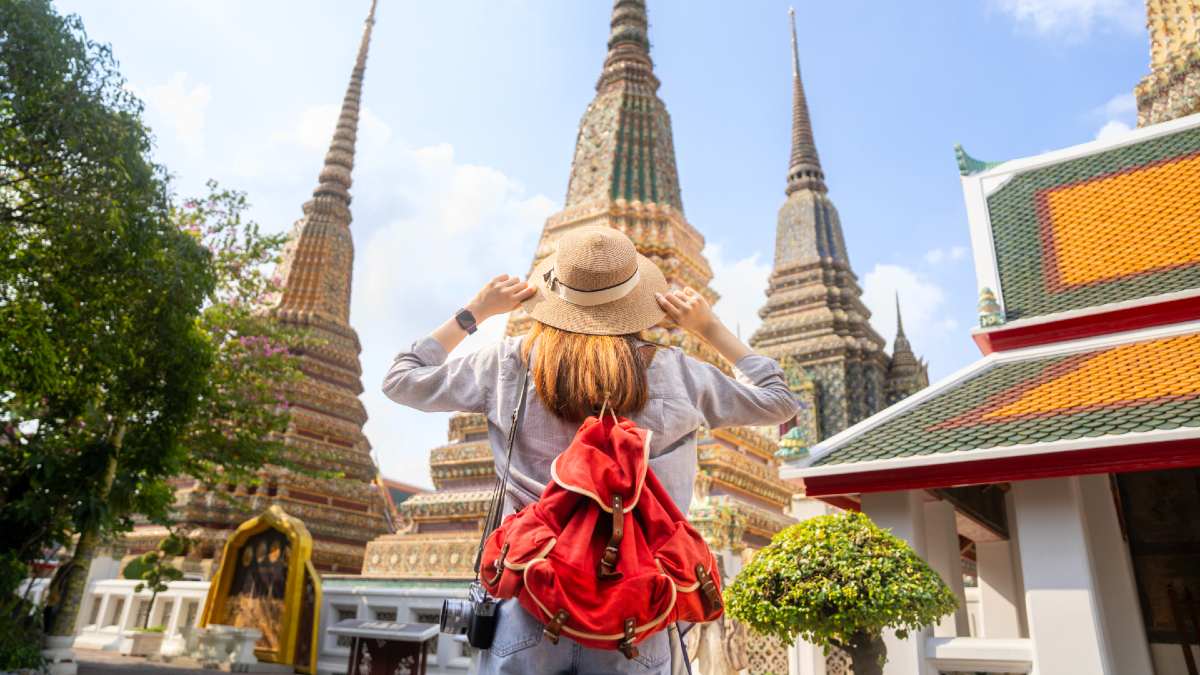
Australians can visit Thailand for up to 60 days without a visa. Image: Getty
Entering Thailand from Australia
Australians typically fly from Sydney, Melbourne, Brisbane, Perth, Adelaide and Cairns to Thailand.
Major Thai airports where Australians arrive include:
- (Bangkok) Suvarnabhumi Airport (BKK)
- (Bangkok) Don Mueang International Airport (DMK)
- Phuket International Airport (HKT)
- Chiang Mai International Airport (CNX)
- Krabi International Airport (KBV)
- [Koh Samui] Samui Airport (USM).
The most common airlines flying between Australia and Thailand are Thai Airways, Qantas, Jetstar, Scoot, and Emirates.
Converting AUD to Thai currency
Thailand's currency is the Thai Baht (THB). Only exchange money at authorised money changers - these are located at airports, tourist areas, and major cities and towns.
Many hotels, restaurants and high-end shops also accept international credit cards.
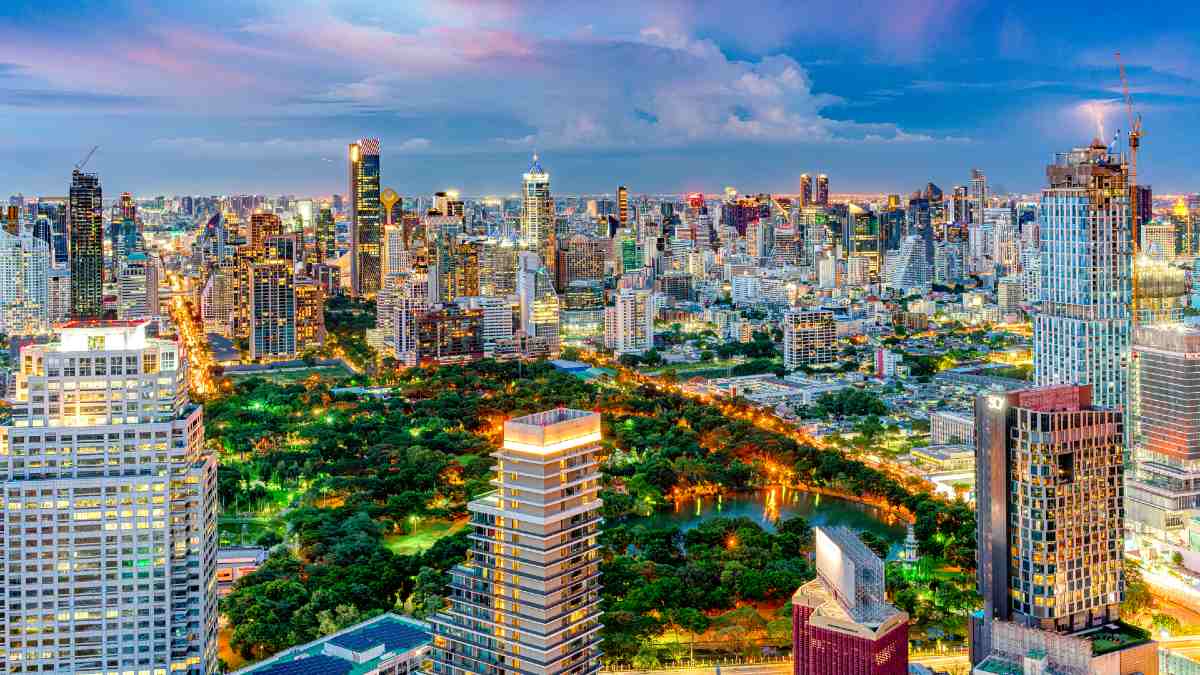
Many Australians visit Bangkok, Thailand's capital city. Image: Getty
Staying connected in Thailand
Staying connected to work or family while travelling in Thailand is simple. There are several options depending on your budget and how much data you need.
Can I use an Australian SIM card in Thailand?
Australian mobile providers like Telstra, Vodafone and Optus do offer roaming plans for Thailand, but these can cost between $5 and $10 per day. Other providers such as Felix offer much cheaper international roaming deals. Check with your telco about their international roaming packages or daily passes before you leave for your trip to avoid unexpected charges on your return.
If you have access to wifi in your hotel, enable roaming only when you need it and use free wifi instead. Check with your hotel to ensure you are using verified networks only.
Buying a Thai SIM card
Top Thai SIM providers include AIS, DTAC and TrueMove H.
You can buy a Thai SIM card at all major Thai airports (Bangkok, Chiang Mai, Phuket, Krabi). They can also be purchased at convenience stores, mobile carrier shops (AIS, DTAC, TrueMove H), major shopping malls and even at markets.
eSIM options
Thailand networks support eSIM technology - so if your phone works with eSIMs, you can purchase and activate an eSIM without swapping physical SIM cards. Purchase online before you travel.
Providers like AIS, DTAC and TrueMove H and other smaller local Thai carriers offer eSIM plans perfect for short-term visitors. Most allow for instant activation with online registration or at the point of sale once you arrive at the destination.
Mobile coverage
Overall, the mobile network in Thailand's major cities and tourist hotspots is very good, with both 4G and 5G coverage generally reliable.
In rural, remote and island areas, coverage may be more limited or there may be no service. Download maps and any necessary information before you set out for the day.
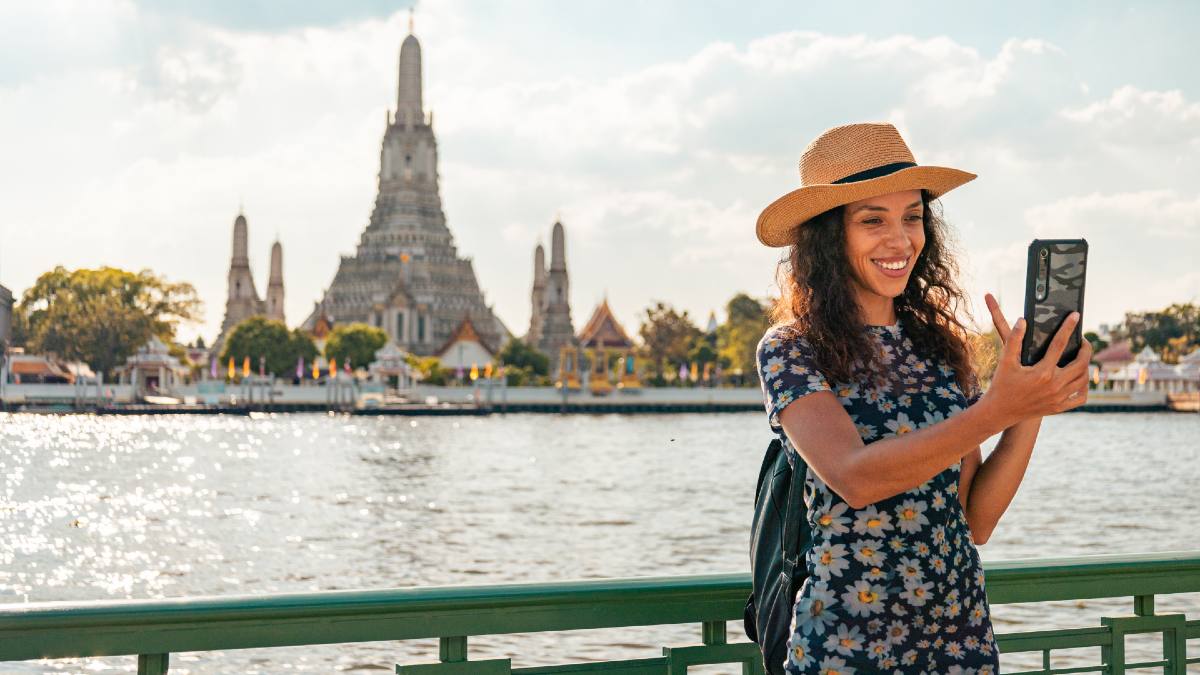
Research whether international roaming, a Thai SIM card or an eSIM will work best for you. Image: Getty
Thailand travel advice & local laws
Alcohol
The legal drinking age in Thailand is 20 (two years older than in Australia). To purchase alcohol, you must show ID. If you're in a bar or nightclub, you're expected to have ID on you.
It may be illegal to buy or consume alcohol at certain times of the day and at certain locations. Check the local laws before you do so.
Smoking
The legal smoking age in Thailand is 18. Smoking is banned in indoor public spaces, on public transport, in indoor workplaces, and on some beaches.
E-cigarettes and vapes are illegal for everyone in Thailand.
Illicit drugs
Thailand has very strict drug laws and severe consequences for those in possession of illegal substances like cocaine, heroin, ecstasy, LSD, opium, amphetamines, benzodiazepines, ketamine and magic mushrooms.
Cannabis was decriminalised in Thailand in 2022 for medical use, but it's illegal to purchase without a local prescription. It's also illegal to use cannabis in public places.
Medications
If you need to bring medications to Thailand, check whether they're legal by contacting the Royal Thai Embassy in Australia.
To buy medicine in Thailand, carry a copy of your prescription or a letter from your doctor stating what the medication is, your required dosage, and that it's for personal use. Australians have been arrested in Thailand for carrying medicine bought at a Thai pharmacy without a prescription.
Not all medication available in Australia is available in Thailand, so make sure to bring enough legal medicine for your entire trip where possible.
Local customs
Thai people have a deep respect for their monarchy. Do not ever joke about the King or the Royal Family, even in private. Disrespecting the monarchy is illegal - even by, for example, liking a post about the monarchy on social media - and you can be arrested for it.
Thais remove their shoes before entering any temple. This applies in small businesses like massage parlours and beauty spas too, so be prepared to bare your feet.
Never point your feet at a person or religious/royal image, or touch the top of another person's head: these are both insulting in Thai culture.
Public displays of affection is generally considered impolite. Holding hands is acceptable in most tourist areas, but shouldn't be done at temple grounds.
COVID-19
At present, there are no vaccination requirements for Australians. If you do test positive for COVID-19 while in Thailand, it's recommended that you self-isolate.
More: How travel insurance protects you in medical emergencies and natural disasters while overseas
It is important to respect local customs when you are in Thailand. Image: Getty
Is Thailand safe to travel?
Thailand is generally safe for Australians, but there are always risks when travelling.
Emergency Number
The emergency number in Thailand is 191.
Weather & Outdoor Safety
Thailand has a tropical climate, so ensure you drink plenty of water and wear a hat and sunscreen.
If travelling during the wet season (May to November), prepare for fast-changing conditions and stay away from flood-prone areas. Bangkok is particularly vulnerable to flooding due to its low-lying geography and the impact of the Chao Phraya River. You can check the Thai Meteorological Department website for warnings.
Crime
Carry an anti-theft bag and ensure you lock your valuables away in hotel safes whenever possible. It's best not to wear anything too flashy that will attract the attention of pickpockets.
Always be aware of your surroundings and don't leave food or drinks unattended in case of spiking. Enjoy your night out with people you trust and buy your own drinks from reputable, licensed venues. Make sure you’ve got a safe way to get home planned before you head out.
More: Common travel scams and how to avoid them
Travel Warnings
Currently, the Australian government doesn't advise travelling within 50km of the Thailand-Cambodia land border due to unrest. This shouldn't impact most Australian tourists, who don't often venture to this region.
It's also advised to stay away from the Thailand-Myanmar border and the Thailand-Malaysia border.
Driving & transportation tips for Australians in Thailand
In Thailand, people drive on the left - the same as at home in Australia.
An International Driving Permit (IDP) is required for Australians to drive in Thailand. If you need an IDP, RACV is Victoria's only authorised seller. You can either apply online or in person at an RACV retail store.
You also need to carry your passport while driving and ensure that you have appropriate insurance for your vehicle.
Be aware of the following driving laws in Thailand:
- Wearing seatbelts is mandatory
- You must wear a helmet when riding scooters or motorbikes
- Speed limits are 100 km/h on highways and 60 km/h in towns
- The blood alcohol limit (BAC) for driving in 0.05 per cent.
Police are present to enforce these limits.
More: Driving overseas guide: licences, International Driving Permit, insurance and road rules
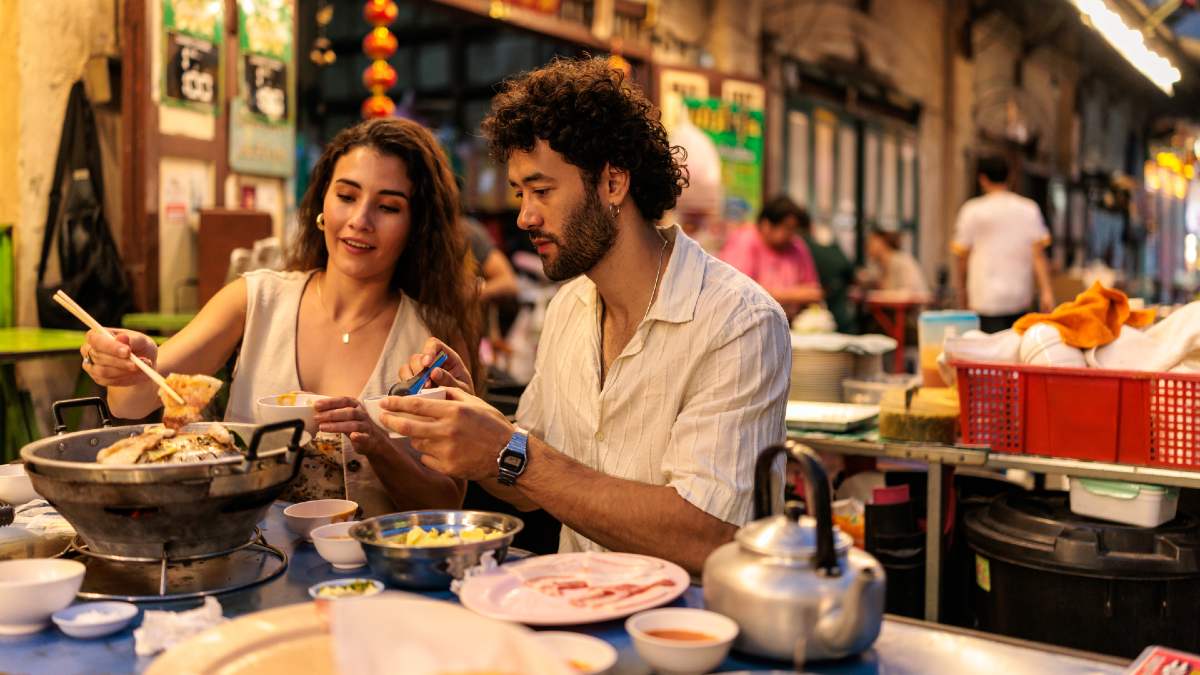
Never leave your food or drink unattended when dining in Thailand. Image: Getty
Do I need travel insurance for Thailand?
Australian Medicare does NOT cover healthcare in Thailand. If you're planning a trip to Thailand, it's important to consider international travel insurance, which can include:
- medical and evacuation cover in case of emergency
- trip cancellation protection
- sports and activities cover, if you plan to engage in hikes, water activities, vehicle activities or other adventure activities.
Make sure you read the Product Disclosure Statement. This document tells you what the travel insurance policy covers and does not cover (known as exclusions and General Exclusions), the limits under each section of cover, your obligations, and what to do when if you need to make a claim.
RACV Members save on Thailand travel insurance
Medical emergencies & healthcare for Australians
Thai healthcare is not free for Australians. Travel insurance can help cover the costs of hospital stays, clinic visits, medication, ambulance fees, evacuation fees, and dental procedures. You will typically need to pay an excess before your insurer covers any costs, but without travel insurance, you’ll have to pay the full amount out of pocket.
All over Thailand, pharmacies are widely accessible for over-the-counter medications. Look for the Green Cross and take your phone so that you can use Google Translate to communicate with pharmacists.
For emergencies, dial 191.
More: Countries with reciprocal healthcare agreements when travelling overseas
Luggage rules & customs for Aussies
Standard baggage allowances on flights from Australia to Thailand range from 23-30kg, depending on your airline and their specific requirements.
Hand luggage on a Jetstar flight is 7kg, but on Emirates and Qantas weight limits vary. Check with your airline before you travel to avoid on-the-spot, hand-luggage fees.
Biosecurity rules are strictly enforced. Do not bring any food or plant material like fresh fruit, vegetables, meat, dairy or seeds into Thailand.
Drugs, vapes, e-cigarettes, firearms, and pornographic material are prohibited in Thailand. Don't carry any of these items either in hand luggage or checked baggage.
More: What happens with lost or stolen luggage at the airport?
Thai healthcare isn't free for Australians, so look into getting travel insurance. Image: Getty
Useful apps & emergency contacts for Thailand
Apps recommended for Aussie travellers:
- Doctor Anywhere Thailand - for online consultations and minor health issues
- Google Translate - for street signs, menus and communication (especially in rural areas)
- Grab - for cheap and easy transport around cities
- WhatsApp - lots of tourism providers use this as a way to communicate with tourists.
Emergency numbers in Thailand
- Main number of all emergencies is 191. If the operator is unable to speak English, call 1155 (Tourism Police).
- Fire - 199
- Ambulance - 1724 (in Bangkok), 1669 (everywhere else in Thailand)
- Marine/water rescue - 1196
- Roadside Assistance (AAS) - 02 718 7555 (Bangkok-based)
Australian Consulate help in NZ
Australian Embassy, Bangkok
- Address: 181 Wireless Road, Lumphini, Pathumwan, Bangkok.
- Phone: +66 2 344 6300
Australian Consalate-General, Phuket
- Address: 6th Floor, CCM Complex, 77/77 Chalermprakiat Rama 9 Road (Bypass Road), Mueang District, Phuket
- Phone: +66 76 317 700
These officials can help Australians in emergency situations and during natural disasters. They are the people to contact if you need to renew your passport due it being lost, stolen or damaged. They can also provide legal advice, if needed.
Google Translate can be helpful for reading signs and menus. Image: Getty
Frequently Asked Questions about Thailand
Do I need a visa for Thailand?
No, if you have an Australian passport, you don't need a visa to visit Thailand for up to 60 days - but you do need to have at least six months left on your passport and fill out the Thai Digital Arrival card.
Can I use my Medicare card in Thailand?
No, Medicare does not cover healthcare costs in Thailand. It is important to consider travel insurance for the unexpected, such as emergency medical treatment.
Can Australians work in Thailand?
Yes, Australian citizens can work in Thailand with non-immigrant visa and a Thai work permit issued by the Ministry of Labour.
Is it safe to drink tap water in Thailand?
No, Thai tap water is not considered safe for foreigners. Some hotels have treated water available, or you can purchase water at convenience stores. In highly touristic areas, ice is usually safe - but if in doubt, go without.
What's the best time for Australians to visit Thailand?
November to February is the best time to visit Thailand, as there is little rain and the days are warm and sunny.
March and April can get very hot. In the wet season (May to November) you can expect rain, but also cheaper travel.
November to February is generally the best time to visit Thailand. Image: Getty
Quick travel checklist for Australians
- Valid Australian passport
- Travel insurance with medical cover
- No fresh food coming through customs
- International Driving Permit (IDP) for car rentals
- Know the emergency numbers and consulate contacts.
More: When to book travel insurance
Final tips for Australians travelling to Thailand
- Always respect local customs and biosecurity regulations when travelling in Thailand.
- Take care in the tropical weather. Sunstroke can land you in hospital and ruin your holiday.
- Check your travel insurance policy for conditions, limits and exclusions. For example, RACV Travel Insurance covers most amateur sports and activities when you meet specific criteria. Ensure you read the relevant Product Disclosure Statement for details.
The information provided is general advice only. Before making any decisions please consider your own circumstances and the Product Disclosure Statement and Target Market Determinations. For copies, visit racv.com.au. Royal Automobile Club of Victoria (RACV) Ltd AR 001243563 is an authorised representative of the issuer and receives commission for each policy sold or renewed. RACV Travel Insurance issued by Tokio Marine & Nichido Fire Insurance Co., Ltd ABN 80 000 438 291 AFSL 246 548. Terms & conditions apply, refer to the PDS.

